“A podcast for writers, by writers, to keep you writing.”
“Just Keep Writing” is, at the time of this writing, a fledgling podcast that boasts a modest five episodes. I don’t expect this number to stay low for very long. Listening to the podcast, you can tell that the two hosts, Marshall and Nick, are both incredibly passionate about elevating their amateur writing hobbies into bona fide career opportunities. Between the two of them, they cover an impressive swathe of life experiences and motivations, with previous podcasting history under their belt, and connections within the writing industry. The fruits are ripe for a long-term podcast.
Even this early in the lifespan, the podcast has gained a decent following, with an active Discord channel where fans and fellow would-be authors can communicate and learn from one another. The highlight for me so far was their interview with guest Maurice Broaddus, author of many a fantasy and horror novel, including the upcoming steamfunk adventure, Pimp My Airship (which might be one of the best novel names I’ve ever heard). In the episode, Maurice gave us some insight to the inner workings of his daily grind, as well as explored his passion in community development for the black community. If this is the standard for guest episodes, then I have a hard time believing that Just Keep Writing will be anything but successful, especially if the regular episodes keep bringing the quality writing tips and challenges as they have insofar.
If nothing else, they have at least one new fan in me.
I recently came across an article from the Bebop Attic (linked below) which explores the topsy-turvy, sometimes painful discourse of friendship that is the main cast of Cowboy Bebop. Being a long-time fan of Watanabe’s work (and CB, in particular), I am always delighted when I find a new angle on this classic anime. For all their casual disregard and generally laid-back, easy-going nature, it’s important to remember that Spike, Faye, and Jet are, at the end of the day, hardly more than active shells of the people they used to be. They are walking walls, keeping everyone around them at arms-reach, yet inexplicably can’t pull themselves apart from their meandering life together exploring the cosmos.
Take a look at the original article for more detail. And if you haven’t seen Cowboy Bebop yet, or it’s been a while since you last explored space with the crew of the Bebop, I encourage you to rectify that as soon as you have a chance. It ages like your favorite wine.
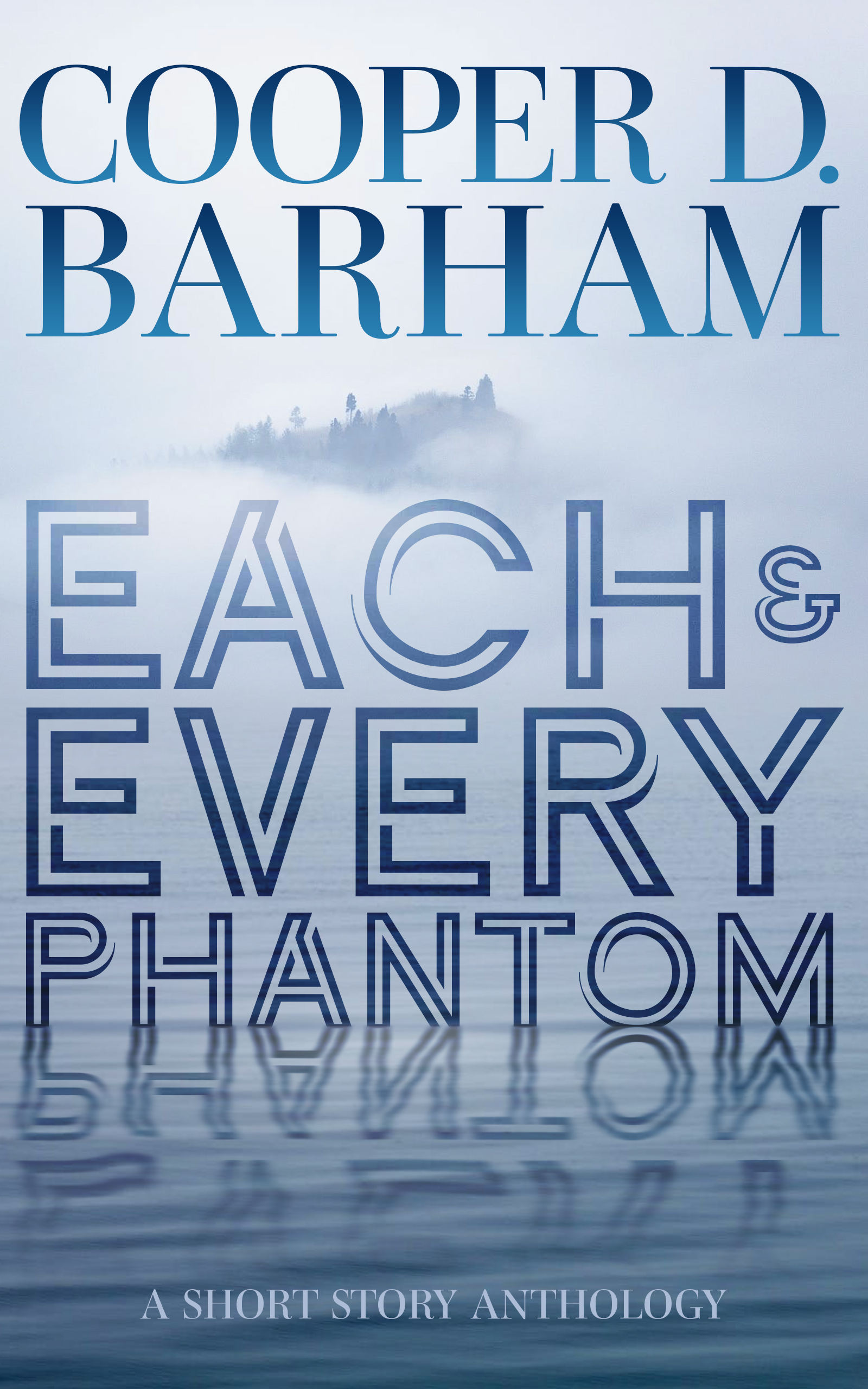
Checking in really quick just to say that my short story anthology, “Each and Every Phantom” finally had its paperback version go live on Amazon. Below is a synopsis and link. 🙂
“From the classic ghost story to a team of toys that defend the dreams of children, “Each and Every Phantom” explores tales rotating around different kinds of spirits. Within these narratives can be found the dreams of the dead, a haunted ship, the echo of a suicide, a family who struggles to stay together even after death, and more.This debut anthology is perfect for a little kick of Halloween in Winter, with pockets of adventurous whimsy and emotional turbulence woven throughout.”
Featured stories include:
“The Priestess” “Dream Brigade” “The Fangs of March” “Brother, My Brother” “The Stardust Mirror”
Published by Mythos & Ink, “Area of Effect: Wisdom from Geek Culture” checked a lot of my boxes. Using pop culture and the wider community of geekdom as a vehicle, the writers within challenge the quagmire of life with subtle excellence. Regardless of what media is most endearing to you—whether it cinema, novels, anime, video games, etc.—there is bound to be at least a handful of insightful deductions that make you think, or personal tales that make you feel.
I know a small handful of the collaborators involved in this book. I worked with most of them, in one way or another, during my time as a writer and editor at Geeks Under Grace. But Area of Effect afforded me an opportunity to learn new things about each of them, both in their opinions on various stories, as well as formative events that shaped their lives. I think what was most impressive about this compilation, however, was the consistency of ‘oh‘ moments I had. I was challenged to think in new ways (I’d never considered what it must have been like to be an average citizen in the sociopolitical climate of the Fire Nation when Sozen decided to siege the world), and I’ve never understood the appeal of Buffy the Vampire Slayer until two or three different chapters addressed aspects of its story. Now it’s at the forefront of my list (along with Joss Whedon’s Dollhouse).
There’s something for every geek in this series of articles and essays. Do you like anime? Plenty of that within these pages. Marvel films? There are at least four topics around those. Video games? Galore. Lord of the Rings? But of course.
I think it takes a unique frame of mind to connect the fiction we read to the lives that play out before us every day, and something even greater to learn from that connection. If you appreciate good dialogue on the merits of your favorite pieces of fiction, I implore you to pick up this book, available on Amazon in both Kindle and paperback versions. I suspect you will not be disappointed.
E3 2018 revealed a feast of new video games that we should expect to see throughout this year. One game that stood out to many people, myself included, was the sadly serene Sea of Solitude, developed by Jo-Mei Games and published by Electronic Arts. This waterscape misadventure, characterized by an aesthetic of over-saturated colors, braces itself against a narrative exploring loneliness. It is also Electronic Arts’ first major foray into supporting an indie story that focuses on mental health. Their support cannot be understated.
Laura Parker of the New York Times talks about Sea of Solitude in further detail below, as well as other video games that dare to explore the complicated waters of mental and emotional health in video game storytelling.
My first project with Amazon hit a few bumps, but I went into this knowing it was a learning process.
One of those bumps is not such a terrible thing. As of today, “Each and Every Phantom” is live in e-book format! That is a few days earlier than intended, but it’s probably best that it went up before a weekend, anyways.
You can find the e-book at the link below! Thank you to everyone who helped in its cultivation. A paperback version is in the works, we’re just busy ironing out some technical details. Updates on that will come further down the pipeline.
If you read it, I would be grateful for a review, good or bad. The Kindle app is free and can be downloaded from Amazon directly.
Here we are, back from the dead, and I come with an announcement.
My first foray into the kaleidoscopic, harrowing territory of self-publication is just beyond the horizon. This February, my short story anthology, “Each and Every Phantom,” will be finding a home in Amazon’s in-house publishing service. The exact date is yet to be announced, but will be posted here as soon as it’s confirmed.
Loren Stump (@acrylix91 on Instagram) did me the honor of designing the cover, which is beautiful and everything I could have wanted.
Updates and details to come as we approach release.
The proceeding is a complete list of works I’ve had published across the internet, in descending order from newest to oldest. The first half includes all of my publications with Geeks Under Grace, where I’ve been a content creator since mid-2014 and department editor since early 2018. The second half includes all publications to my personal writing blog, including my serialization of “Anarchy” which ran through 2015. Aside from “Anarchy,” “Iscariot,” and a few short stories in the early days of the blog, none of my prose writing has been formally published.
So a couple months ago I found a writing gem in the form of this sassy, hilariously self-deprecating character known as Jenna Moreci. Jenna is, at her own admission, a bit rough around the edges. But this is also one of her greatest strengths, and I doubt I would have gone through half her upload history if she were as tame as other writing-centric Youtube creators.
Jenna is a bona fide, published author who is eager to share not only her advice on the various topics which orbit writing and publication, but her own personal goals and the progress she makes towards each. She’ll call herself and/or you a variety of colorfully crude things, but she means well, I promise.
Sometimes her fiance Cliff will be on the video with her, and you can only expect fun times when their chemistry begins to show.
This is one of the only few Youtubers where I have that little notification bell clicked, so I can see what she shares as soon as it goes up. I highly recommend checking her out. Some of my favorite of her videos are:
This is the fifth in a five-part series to be released daily, in which I unpack my favorite instrumental songs in the history of, well, ever. Narrowing this list down was obviously difficult. There were four “waves” needed to thin out the contestants from my library of thousands, and once we got below one-hundred it was like pulling teeth.
Yet, I stayed true to my original goal of fifty, for my own sake, and not compromise that number. I wanted to know for myself what I believed were my favorites among the gallery of songs I so dearly love. This following list is the conclusion of those struggles. They are not in order. Simply getting a pool of them was hard enough. I do wish to leave with my sanity.
Many are favored because of their execution and style, while others, because of a particular attachment or association they have with my personal life. With each entry will be a short blurb, explaining why it belongs. And for a disclaimer: if I couldn’t understand what language they were singing in, I considered the vocals as their own independent instruments, and thus things like Gregorian chants do not disqualify songs from being “instrumentals.”
Enjoy.
#41 – “Atonement” by Masashi Hamauzu
My all-time favorite song, in-and-outside of instrumental music, accounting for all genres and all phases over the course of my nearly twenty-seven years of life. In the beginning, I didn’t think much more of it than “mmm, what a bittersweet sound,” but with time and repetition, it wiggled its way into the soft, squishy parts of my heart, and nested there. I am not going to boast of its technical or emotional merits. Just please do me the favor of listening to it a couple of times, and if you find it not capturing you right away, return later. It is not for all moments of life, but imperative to a specific few which matter. I hope you are fortunate enough to find this song in one of those times.
#42 – “Soul Battles” by Ryan Taubert
Similar to “Time” from Inception, “Soul Battles” darkly shines with a heavy, swaying sadness. It is the sound of somebody who is being overcome. I’m going to waylay my usual blurb for these entries. Just let the music carry you away to the trenches.
#43 – “Kakariko Village” by Koji Kondo (performed by the Legend of Zelda 25th Anniversary Symphony)
This famous track from The Legend of Zelda practically oozes good feelings. I feel safe when I hear this song. I feel home. This song precludes the adventure, showcasing the mystified daydreams of a hero-to-be, before he picks up the blade. “Kakariko Village” is quaint, just like the village itself in every incarnation of Zelda. I’m not the world’s biggest Zelda fan, but Link to the Past was one of the first games I ever played, and I would sometimes just leave my character sitting in the middle of the village to hear the soothing overture. They brought perspective and optimism whenever I was feeling lost or uncertain in my direction. It still makes me feel that way. And for a song to be able to do that is nothing short of phenomenal.
#44 – “Kindred Spirits” by REEN
I think the image in the above video does a pretty good job of capturing my feelings towards this song. “Kindred Spirits” is gingerly, romantically tragic. An honest love, cracked down the middle by external powers. Romeo and Juliet, except believable, and actually sad. If I walked in on the scene depicted in that video, in that lighting…yeah, I can see how this song would fit.
#45 – “Friends” by Yoko Kanno
I have no idea what this show is about. I’ve never seen Wolf’s Rain, but I discovered its soundtrack around the time I was reading a series called Bakuman. A major theme in Bakuman is that of friendship and camaraderie, to which this song appropriately fits. Yet, despite the earnestness of the track, it’s very clearly a song of bittersweet quality. I suspect it originally plays in Wolf’s Rain to the scene of a friend dying, or having already passed and being reflected upon. At any rate, that piano lacerates my strength. I am made somber beneath its gentle might, just in time to be done in by the violins which follow after. We approach the conclusion with a dirge of aching woodwinds, playing notes so low, they’re practically whispers. Whispers between friends. A promise to never forget one another.
#46 – “Ascending into Naught” by Demetori
(Despite the picture above, this is not from an anime…just a video game with anime aesthetics.)
It was difficult to narrow down one favorite from the Japanese metal band Demetori, but, gun to my head, I’d have to go with “Ascending Into Naught.” This song has been on my workout playlists since my friend introduced me to it in college. The colliding harmony of layered guitars—some riding power chords, the others flying through high notes— synchronize perfectly with the piano to create what sounds to me like a grade-A, final boss video game track. You can even tell when the final boss would go on its last leg. Near the 5:48 mark, a slaughtering drum-line breaks through a tasteful lull in the energy of the song, ushering it to new heights, in which the guitars and piano/synth run a gauntlet of increased stress and speed and rioting awesomeness.
This song is crazy, it’s epic, and it’s so much fun. Just like everything Demetori does.
#47 – “Beyond” by Lorne Balfe and Hans Zimmer
When people describe something which is “epic,” they are referring to scope and magnitude. If something is epic, it is of great consequence, usually world-altering in nature, involving hundreds, if not thousands, millions, or billions of moving pieces.
If I were to describe “Beyond” in any two words, it would be as the spiritual incarnation of “epic sorrow.” This is the dirge which follows a long, hard-fought battle, and things did not turn out well. As the siren-like strings slowly crescendo, they build into a drop which plunges your heart into your feet. This song is the sound of hope dying, as all the world weeps. It, and the game it comes from (Beyond: Two Souls) were the original seed from which my own story, “Doubting Puppet,” was founded.
#48 – “Between Worlds” by Roger Subirana Mata
I’m sorry the world is not what it should be—that the crack in your chest has held on despite all these years of trying to make it go away. I’m sorry people are not always patient, not always kind. I’m sorry that sometimes neither am I. I’m sorry you’ve lost friends, in however way that might have happened. Tragedy is not always necessary in losing someone important. I’m sorry your heart doesn’t always feel big enough or strong enough. I’m sorry your mind doesn’t always feel as though it can persist through the gales of stress which blow your way.
I’m sorry people don’t understand, can’t understand, or won’t understand. Please forgive them. Please forgive yourself, because you know sometimes it’s hard for you to understand, too. That’s not your fault, it’s just the way of things. We do the best with what we have, and as long as you are doing all you can, no fault can be justly held against you.
#49 – “Farewell, Life” by Arn Andersson & Nights Amore
One of the saddest songs I know. Dangerously sad. It should not be consumed without caution, and definitely not over an extended period of time. Beneath the heartbreaking rhythm, a seduction is taking place, a parasitic spirit of hurt which will slowly drain you of vitality if you’re not careful, and lead you into thoughts of obliteration, however hypothetical. That said, it is beautiful. The ocean in a grey morning, not a stir to be seen, despite the cool gust tossing your hair. Froth on the rocks. A quiet harbor town.
“Farewell, Life,” is a deathbed anthem. It’s what plays in the miasma of the spiritual plane when one of our own passes over, eyes clicking shut for the last time. Songs like this are important. They help us remember death isn’t necessarily bad or scary. But it is significant, and should never be forgotten.
#50 – “Super Saiyan 3” by Bruce Faulconer
80’s Hair-metal ain’t got nothin’ on this. ^^^
There is a special place in my nerdy heart for many of the Super Saiyan themes. This one is arguably my favorite (there was much internal debating). Where the theme from Goku’s original ascension carried with it the sound of a legend being born—mystical and slow—and Gohan’s theme from reaching Super Saiyan 2 showed him surpass his father—chilling and violent—the Super Saiyan 3 Theme is something else entirely. In Goku’s own meme-ified words, it is “to go even further beyond.”
This is the song of the ultimate hero, one who has found the final ceiling of their own potential, and somehow managed to push through it. When the heroes of Dragon Ball Z first reached Super Saiyan, they were quick to realize there was something beyond it, a perfected form. Super Saiyan 2 was achieved: the natural end to their evolution. But Goku, he invented a level beyond that, something he and only he had ever done.
Super Saiyan 3 was an impossibility, creating one’s own reality from just being that awesome. While the transformation in-series had the least emotional build-up and impact, it was no doubt memorable for its sheer confidence. This song helped craft that feeling, make it whole, and cemented Goku, for better or worse, as one of the coolest shonen protagonists of all time. So it would be fitting to make his ascension to SS3 the bookend to this immense list.
Thank you for reading. I hope you found at least one song you enjoyed.



 Dark Blue Owls