“Just Keep Writing” – An Emerging Podcast

“A podcast for writers, by writers, to keep you writing.”

“Just Keep Writing” is, at the time of this writing, a fledgling podcast that boasts a modest five episodes. I don’t expect this number to stay low for very long. Listening to the podcast, you can tell that the two hosts, Marshall and Nick, are both incredibly passionate about elevating their amateur writing hobbies into bona fide career opportunities. Between the two of them, they cover an impressive swathe of life experiences and motivations, with previous podcasting history under their belt, and connections within the writing industry. The fruits are ripe for a long-term podcast.

Even this early in the lifespan, the podcast has gained a decent following, with an active Discord channel where fans and fellow would-be authors can communicate and learn from one another. The highlight for me so far was their interview with guest Maurice Broaddus, author of many a fantasy and horror novel, including the upcoming steamfunk adventure, Pimp My Airship (which might be one of the best novel names I’ve ever heard). In the episode, Maurice gave us some insight to the inner workings of his daily grind, as well as explored his passion in community development for the black community. If this is the standard for guest episodes, then I have a hard time believing that Just Keep Writing will be anything but successful, especially if the regular episodes keep bringing the quality writing tips and challenges as they have insofar.

If nothing else, they have at least one new fan in me.

Back from the Dead

Here we are, back from the dead, and I come with an announcement.

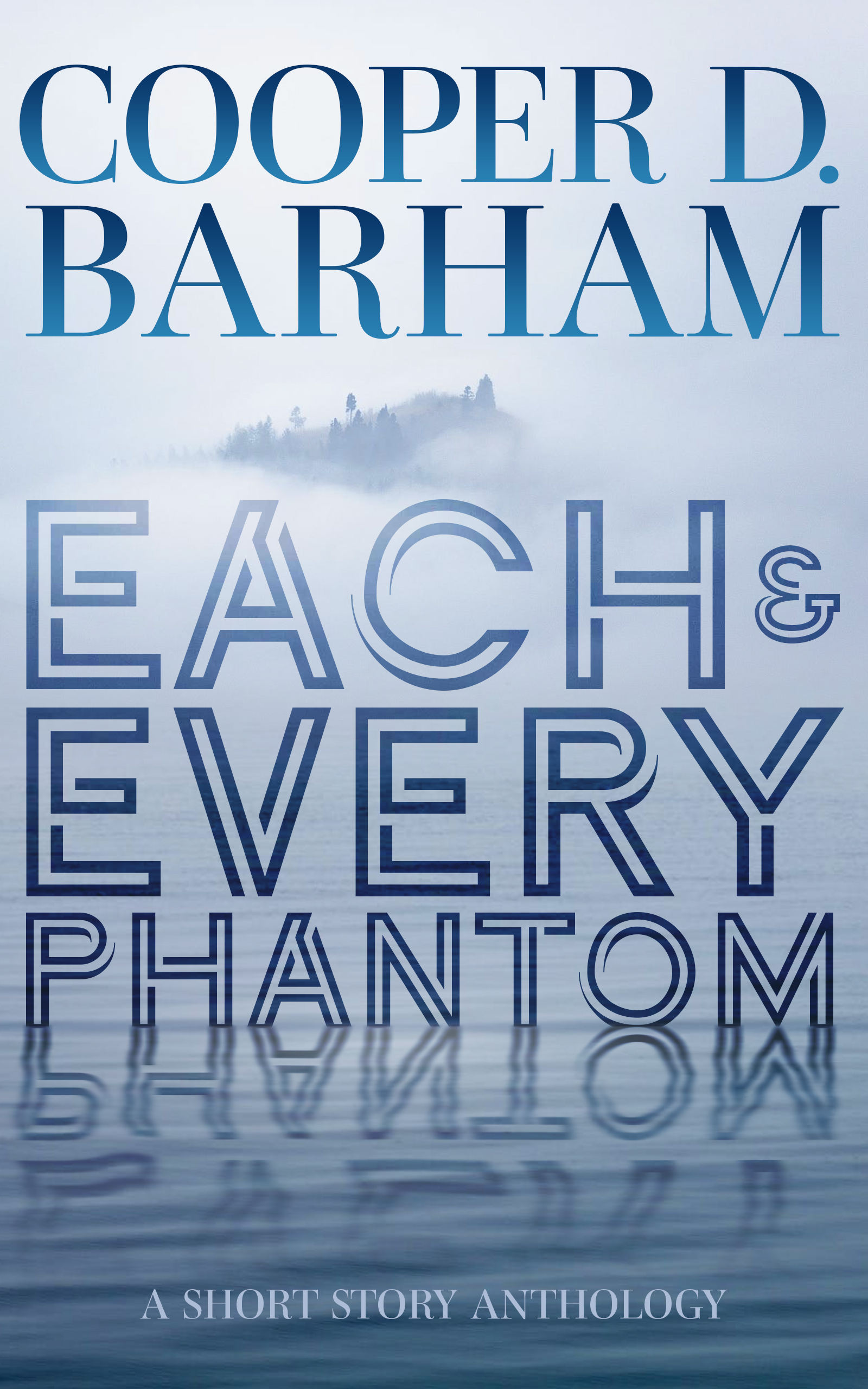
My first foray into the kaleidoscopic, harrowing territory of self-publication is just beyond the horizon. This February, my short story anthology, “Each and Every Phantom,” will be finding a home in Amazon’s in-house publishing service. The exact date is yet to be announced, but will be posted here as soon as it’s confirmed.

Loren Stump (@acrylix91 on Instagram) did me the honor of designing the cover, which is beautiful and everything I could have wanted.

Updates and details to come as we approach release.

Thanks all you happy people.

The Puppet Masters (#4 Magic & Sanderson’s Laws)

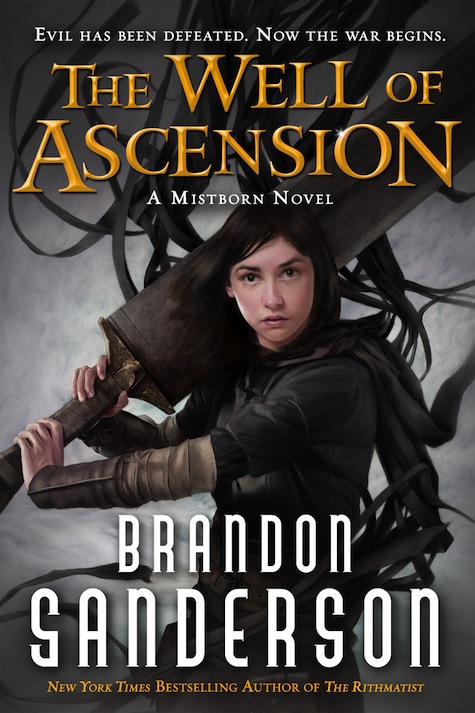
The-Well-of-AscensionBrandon Sanderson has been bunkered down on the frontlines of the contemporary fantasy and science fiction industry over a decade now.  Between his acclaimed Mistborn and Stormlight Archives series, as well as being selected to complete the late Robert Jordan’s Wheel of Time, Sanderson has consistently proven his ability to create powerful tales of magic and wonder. While Sanderson has been teaching university-level courses on writing contemplative fiction for years now (at BYU, his alma mater), there is one facet of his process which he talks about more than most else.  It is his forte, both self-proclaimed and evidenced by the opinions of fans and critics alike: magic systems.

Sanderson’s ability to build a world is superb, and his utilitarian approach to magic is redefining crowd expectations for the fantasy genre. I should clarify before we continue, ‘magic system’ is a universally accepted, catch-all term for nearly any supernatural or super-scientific element within a story.  A ‘magic system’ is not exclusively about ‘magic.’ Advanced technology, superpowers, and various other forms of otherworldly abilities can all fall under ‘magic’ in this sense, as they are things which transcend natural human power.

Please keep that in mind as we continue.  In addition, many of Sanderson’s lectures can be viewed online. Here is a link to the one which contains most of what we will be discussing.

(Note: Brandon is aware that the names of these laws sound pretentious. They were originally for his own reference and when people started asking him about his rules for making magic, the names just kind of stuck.  It’s kind of an ongoing joke now.)

Sanderson’s First Law:

“Your ability to solve problems with magic in a satisfying way is directly proportional to how well the reader understands said magic.”

Foreshadowing is always important.  Regarding the first law, even more so. If you are going to have a harder magic system (which is to say, one with more rules and limitations), it is important you help the reader understand the parameters of the magic before you start doing crazy things with it. Those crazy things need to be explainable within the context of your magic’s boundaries. If a character has the superhuman ability to lift a maximum of one-thousand pounds and no more, you can’t have them stop a bullet train when it’s about to hit somebody.  The momentum generated by a bullet train would be too great for that limitation to deal with. That breaks the rules of your own magic system and is thus an unsatisfying answer to the problem.

That word ‘satisfying’ is important.  Not only must you be consistent with the science and boundaries of your magic, but you should always strive to be imaginative, too.  There is rarely only one way to solve any given problem.  Be mindful of how your magic can interact with the environment and other characters involved, if any.

Sanderson’s Second Law:

“Flaws are more interesting than powers.”

We aren’t talking about character flaws, but flaws in the magic system itself.  Rather, the specifics of the boundaries and limitations.  Do you have a character who can summon an ancient fire beast to fight at their side?  That’s cool…but what’s the catch?  The catch is usually the best part.  A simple and common answer is that it drains the summoner of energy or vitality, but there are others with more unique answers.

Ask: what is the cost?  Is it economic? Moral? Emotional? Mental?

The author Brent Weeks has a specific element in one of his magic systems which allows for characters to gain immortality. However, and the main character learns this tidbit of information a little too late, but every time you die, your resurrection costs the life of one of the people you love the most.  Or in the Japanese manga, Naruto, the main character has access to a tremendous well of inner power that allows him to conquer most obtacles…but at the cost of going into a berserker-state, breaking down his mind, tearing apart his body, and risking harm to anyone nearby regardless of whether they’re friend or foe.  Such a power as that is not one you want to throw around without immense consideration.

Is the magic needed for travel? Is it needed to keep society moving? If possible, try to make the magic imperative to life in more ways than as a means to destruction.  Far too many series are victim to that tendency.

Also, these boundaries are obviously under your complete jurisdiction, but unless you are going for a certain tone, it’s wise not to go too far off the deep end.  Teleportation is cool, but it’s kind of weird if you can only teleport when standing on one foot.  You can turn into an animal only when you have a marble in your mouth? Saying Hitler’s name three times allows you to turn invisible?

Please don’t be too weird.  Stuff like that is funny for only a brief time and quickly grows old.

Sanderson’s Third Law

“Go deeper into magic, instead of wider.”

Here’s a problem many superhero stories such as X-men fall into.  There are so many powers that none of them get any particular attention, at least not in a timely manner.  Hollywood and amateur writers alike think it is more interesting to have this grandiose arsenal of neat abilities in the cast of characters, but they keep the utility of all these abilities at surface-level.  They have fallen into the misconception that more means better.

But if Sanderson’s success stands for anything, it’s that more certainly does not always mean better.

Sanderson’s 0th Law

“Always err on the side of awesome.”

The name of this one is kind of a trade joke, but the premise is quite simple.  Sure, the boundaries and rules can allow for creativity in your writing and story-crafting, but in the end this is science-fiction and fantasy.  The granddaddy of all laws is that whatever you do, make it cool.  We are operating within a field of writing that has greater access to the manipulation of the universe than any other genre.  If you have an awesome idea and can build your system around that idea to make it feasible, then by all means, make it work.  Don’t force something that isn’t there, but if it’s possible, do your best to bring that awesomeness to life on the page.  You’ll love it, and the readers will probably be just as awed as you were when the idea first crossed your mind.

The Puppet Masters (#3 On Writing)

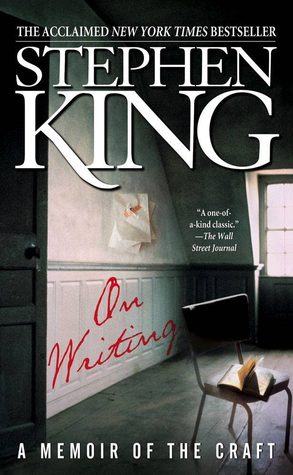
10569I recently finished my first read of Stephen King’s “On Writing.” I say first, because now that I’ve made one lap I’ve grown convinced this needs to be a part of my annual agenda. Maybe I’ll make it a consistent tradition for my wayward summers. Like I have anything better to do.

Well, I suppose actually writing would be a better thing to do. Hmm.

Anyways, with this installment I’m going to outline a couple of passages or ideas King details in his book. These are only a few of the things which glared out and demanded attention. I promise there were more, but I can’t go and reproduce the entire thing for you. That, my friends, is cheating, and I’d be stealing a wonderful opportunity from you to read these words in their original, glorious context.

First is the concept of “Write with the door closed, rewrite with the door open” and it’s pretty clear-cut.  In short, we are easily distracted during the first draft of a manuscript, not only by environmental stimuli, but our desire to have others read the material.  Resist this urge.  The first draft is for you, it’s so you may explore yourself and your story.  You are trying to fulfill your story and characters as thoroughly as possible alongside yourself.  Only once the first draft is done should the door be thrown open to welcome readers and critics alike.  This is the editing stage.  Exploration is over.  Now it’s just about the grind.

Second, and I am choosing to quote this one directly as I lack the forwardness to extrapolate correctly, is King on the subject of our temperament when approaching the craft of writing:

“You can approach the act of writing with nervousness, excitement, hopefulness, or even despair–the sense that you can never completely put on the page what’s in you mind and heart.  You can come to the act with your fists clenched and your eyes narrowed, ready to kick ass and take down names.  You can come to it because you want a girl to marry you or because you want to change the world.  Come to it any way but lightly.  Let me say it again: you must not come lightly to the blank page.

I’m not asking you to come reverently or unquestioningly; I’m not asking you to be politically correct or cast aside your sense of humor.  This isn’t a popularity contest, it’s not the moral Olympics, and it’s not church.  But it’s writing damn it, not washing the car or putting on eyeliner.  If you can take it seriously, we can do business.  If you can’t or won’t, it’s time for you to close the book and do something else.”

Third is a matter of profanity in the craft. Quoting British television’s Downtown Abbey: “Vulgarity is no substitute for wit.” Authors of all walks and moral standings have gone back and forth on the topic of how much (or how aggressive) profanity should be in their works.  If you’ve ever read a King novel or heard him speak, you know this is not a man who shirks away from dropping a couple bombs when he sees fit.  However, when it comes to writing he has a strong philosophy to back his usage of curse words and otherwise derogatory terms.

ngbbs54a7061c771fa
Mmm, yes. Quite.

According to his mother, profanity was the “language of the ignorant.”  However, there were holes in her own constitution about this matter.  A sharp stab of pain might prompt an “oh, shit” or what have you.  Likewise, few people have an idle tongue when their kid is about to accidentally hurt themselves or when you drop a huge pot of spaghetti sauce onto the carpet.  Chances are, if only by gut reaction, most people are going to swear when these things happen.

“The Legion of Decency” as King calls it, might not like the word damn, and you might not, either, but sometimes you really aren’t given any other choice?  Why?  Because to use a softer word, in certain contexts, is both dishonest and disrespectful to the intelligence and maturity of your audience.  Slam a hammer on your thumb and you stand a better chance of hurling some choice words than substituting it with “Blast it!”  No.  Few people are going to have so mild a response.  Not that it’s impossible obviously, just not common.  If you substitute “Blast it!” with “Damn it!” because you wish to avoid the wrath of the Legion of Decency, you are breaking the unspoken contract between writer and reader.  You have promised to express the truth through your characters and how people act.

To do otherwise because of the judgment of a few is both cowardly and intellectually dishonest.  If you want to get away with books with no vulgarity, you either must write-in some extraneous reasons to the story as to why, or consider a career in middle-grade writing (Not a condescension, an actual recommendation).

Fourth and finally, King writes about how he once heard that all novels written are actually letters aimed at one particular person.  Each writer has a specific individual in mind when they write their stories.  King even mentions how he’d met a man who wrote for their friend who’d been gone for over fifteen years.  King considers people like that the exception rather than the rule, as most people write for a spouse, friend, or, you know, someone else who is actually alive and breathing.  I just found this an interesting concept considering the promise I made to Christina two months ago.  Glad I’m not the only one who is writing for somebody no longer with us.

Those are the four points I wanted to unpack. If you want to read more about each of them, refer to the source material of On Writing by Stephen King. There’s all of this and much more to be found within those pages for both the aspiring writer and somebody who simply enjoys reading in general.

God bless and have a good day.