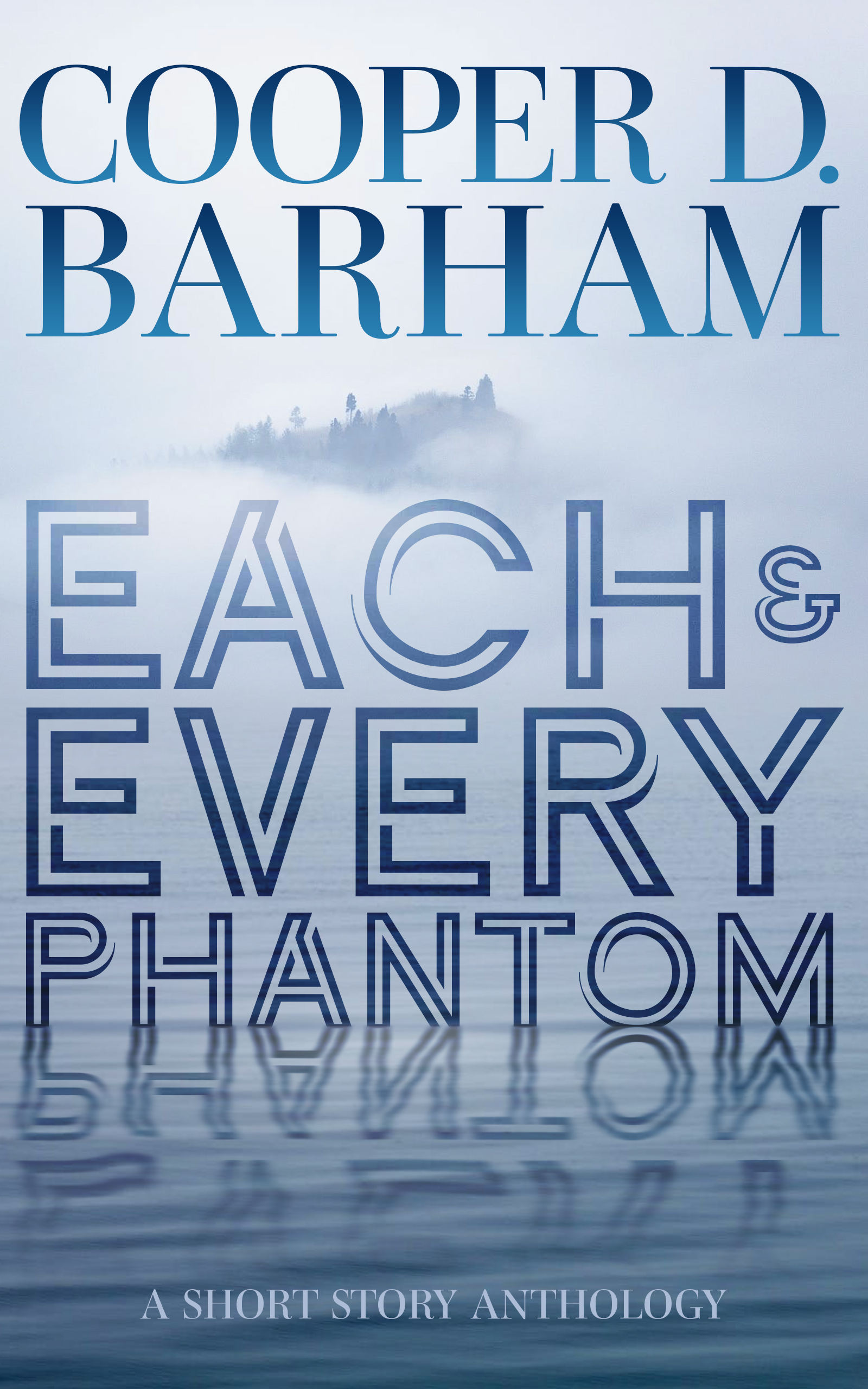
“Each and Every Phantom” sampler

Short story anthology “Each and Every Phantom” available for purchase on Amazon in both e-book and paperback.

“The Priestess”

Even in this dark, Reed could feel the approach and descent of night. The cold always found a way inside, and as it made itself comfortable, Reed nursed his angers. His wrath against his father, that leathery ulcer of human discontent. His sister who did not support him, even when he protected her. This house, this village, and everything which dared to exist.

He clutched at the metal star in his hand and curled upon it—the center of his world. For the first time, he wondered who might have kept it before his mother. It was an old piece of iron, so she was unlikely the first. Perhaps she found it on the side of the road, or received it as payment for services rendered. Perhaps it was a gift from family. Reed knew little of his mother’s family, only that she too, had once had a sister of her own. He hoped there was love between them, greater than the love he knew. He wished his mother was there with him.

Reed pinched at the rise of warm salt in his eyes.

He did not want to be hateful. His mother would not have wanted that of him.

Still, the night clawed forward and Reed saw no release from the gray room, even after the lamplights of the home went out. He would be cold and alone tonight. He tapped his teeth with shaking fingers.

Then the shanty returned. It was in his head all the day long, and suddenly was not. The cadence of it was faint and distant, but absolute and real.

The beast had come again upon the waters.

“Dream Brigade”

As she’d predicted, a large figure lifted itself up from a chasm in the chocolate landscape. It had an arched back, a blood-red bonky nose, wild green hair and skin white as the moon. Shadows retreated down the narrow lengths of its body.

“Aw man, I hate clowns,” Cadence shivered. “Why can’t they ever be pandas or something? Maybe next time,” still, she was a brave balloon girl, so she drew upon the power of her REM balloon sword. If she struck it enough times, she could cure this nightmare.

Tumble took an involuntary step back and swallowed through a hard throat. His chest felt heavy and mixed up, like he’d loosed a tornado of marbles inside. Breathing came in difficult waves. Breathing was not supposed to be difficult.

When finally the clown nightmare pulled itself entirely to the surface, it stood at an amazing height and girth, like a bulldozer. Red and yellow pinstripe overalls covered its body and made its Mickey Mouse shoes seem extra bright and puffy.

The clown bonked its nose with closed eyes. It seemed innocent. Then it smiled, baring a wreath of blackened fangs and eyes that flashed open to veins of red and cold white.

Tumble stepped back a little further and docked an arrow. Kerflooey moved in with the others, head down, his boxing gloves crackling with electric-blue REM.

With a wet crack of its neck, the nightmare charged. Too-long arms dragged along the ground as it lumbered forward, a circus titan from the belly of hell. Its laugh was a demented *hick-hickaw*.

“The Stardust Mirror”

In the kitchen where his mother was usually found slicing bread or baking something sweet, a giant of a man was busy going back-and-forth instead. He was the tallest and broadest creature Tennyson had ever seen outside of the zoo, with everything about him suggesting he might be a distant relative to the rhinoceros. Despite his size, this man, who Tennyson assumed to be the aforementioned Braum, was deft and moved with agility throughout the kitchen, stirring spiced eggs with dexterous fingers, preparing the crust of a cobbler, and flipping strips of sizzling meat on the stove.

“It smells lovely, Braum,” Old Missus Freyja said and retrieved a cane from against a bookshelf in the dining area. Had that cane always been there?

Braum, for all his physical bravado, seemed to blush at this. “You flatter Braum, but he accepts. It will be done soon, we are hoping. Who is this?”

“That’s Tennyson,” Old Missus Freyja leaned in further, if it were even possible with the shape of her back. “I’m introducing him to the family.” She said as if she were passing along a secret.

“Well, Braum hopes we do not spook him. But yes, yes, now we are busy,” Braum attended to a snap of meat which sat on the oven, cooking in burning oil. “We shall talk more later? When Braum is ah, ah, not so busy, ya?” He ran one blocky hand over his blond beard and pink lips. “Lily I think would make for a better introduction, maybe? She is out teaching the chickens how to fly.”

To this, Tennyson’s brow screwed to a point. He looked out the window. “We don’t have chickens,” a pause. “And chickens can’t fly.”

“Ah, but they can,” Braum raised a defiant finger. “You just need to help them believe in themselves.”

Exploring Suicide in Anime: An Analysis of the Medium

**As the title implies, this post speaks towards suicide—how we consume it in media, how it functions culturally, how it affects personal experience. If this is a sensitive topic for you, be mindful of continuing.**

High school was the first time suicide directly impacted my life. A minor friend of a few years had convinced himself he was unworthy of living and killed himself in his middling teenage years—dead before he started. I was not overly familiar with his life, and only tangential in the scope of his social circles, but he was the widely beloved class comic. Witty without effort, smart in how he spun situations to create entertainment for others. Common class-clown things that highly depressed people are often good at. It was one of those things that is obvious in hindsight.

Despite him not being one of my closest relationships, that loss still pried open the gates to a world that, up to then, my naivety had kept in a fantastical land. Intellectually, I understood suicide was a thing that could happen. I had simply never imagined it happening to him.

Suddenly, no one was safe.

Suicide would not have any intimate brushes with my life again until much later, in the tail-end of my college years. This time, it would be a little more personal. This time it was family.

Almost family, anyways. Thank God that darkness was made to retreat, though not without years of heavy battle against some inner demons and leagues of external intervention. It was a wildly complicated ordeal, and I will not unpack it here, because ultimately it’s not what I want to talk about. I only bring up these two circumstances because they served to re-appropriate the emotional energy in my heart and made the topic of suicide one I hold up in both personal and professional interest. I spent years studying the psychology of killing oneself and interacting with people who had tried or wanted to or planned on executing that final act.

Suicide, for all its macabre implications, is important to me. And that’s why I appreciate when I see an honest, realistic portrayal of it in the media I consume. Suicide has a history of being a gimmick, a basic inciting incident or historical cornerstone in a character’s background, but is rarely made the focus of a narrative—probably out of the risk of it tonally disrupting an otherwise happy story.

But that’s what I want to talk about with this article. I write about anime for Geeks Under Grace. I’ve been reviewing anime here since before we had an “anime team,” and I’ve been aching to write an article of this nature for over a year. What eventually made me decide now was the time came after my exposure to the film A Silent Voice (Koe no Katachi), which blew up in 2017, following the international commercial success of Your Name (Kimi no Na Wa). This article is not strictly about A Silent Voice, neither the anime, nor manga versions (both of which have my meteoric recommendation), but I will be drawing on pieces of it, as well as several other anime, to reach my conclusion.

Before we go any further though, I wanted to touch upon suicide as it relates to Japan, the land where anime is traditionally forged. Japan has a long history of suicide, even if the kind we see now is different from the days of old. It’s no secret ancient Japan helped “popularize” the concept of seppuku, or the “honorable death.” You are a samurai who failed to protect his benefactor? Rend open your belly. You had inappropriate sexual relations with somebody outside your family’s favor? It is your duty to atone for the dishonor you have brought upon them, and this means willingly (often publicly) bringing about the end.

And you see, that honor… it never really went away. You can see the echoes of it in contemporary Japanese society. The nuances may be different, but the underlying spirit of the problem remains the same: if you cannot be the steadfast rock your family needs, or find success in a cutthroat professional climate, or contribute to the greater whole of Japan as a nation…well, you can always just kill yourself. Under a magnifying glass, if you break down the various economic and social factors that permeate every angle of Japanese culture, you’ll notice it’s a country almost designed to encourage self-destruction. The tides of difficulty that press against every youth and adult are so staggeringly insane that they’d almost be hilarious if they weren’t real, and the result is that Japan has one of the highest suicide rates in the entire world.

As such it’s encouraging when I see an anime that takes a no-nonsense approach to the subject, because suicide and the mental elements that surround it are something Japan obviously needs to address with more frequency and greater efforts (something their government is finally taking strides to accomplish). Historically, it’s not as if anime development studios (and any prerequisite creators) have been completely adverse to showcasing suicide in their creations; it just seems to be coming into greater prominence now than years past. Suicide has shown up in many series: Neon Genesis Evangelion, Welcome to the NHK, Orange, and even Naruto, to name a few.

But more often, if a character is killing themselves, it’s not out of an innate desire to end their own lives. I want to make this distinction. Dying as a mode of martyrdom, sacrificial protection, or ignorant abuse of one’s own health are not the same things, and should not be confused with what we are talking about. This is intentional self-obliteration, because you’ve found yourself in a situation where you simply don’t want to live anymore.

I recently watched an anime called Made in Abyss, which had one of the most realistic conflicts orbiting suicide I’ve seen inside or outside of the medium. It was a short, gripping scene—one I cannot talk about without spoilers, so if MiA is on your radar, skip down to the bold sentence below and continue reading from there.

I’ll keep this pretty complex scenario as simple as possible. Nanachi is a young girl who has been through a lot. She was enslaved for use in human experimentation by a sadistic madman alongside her best friend, Mitty. Mitty got the far worse brunt of aforementioned experimentation, and now cannot die, despite being in a constant state of suffering. She cannot even die when Nanachi tries to kill her. In so doing, Nanachi only torments her friend more, even after escaping the clutches of the monster who made them this way. Then come the protagonists of the series, who are in a bind. Our lead girl, Riko, is on the cusp of venomous death, but Nanachi can save her, and does. Recovery takes a long time, during which Nanachi becomes friend with our other protag, Reg. Nanachi learns Reg possesses a means of killing Mitty. If Mitty dies, Nanachi can finally be free of the overwhelming emotional burden placed upon needing to take care of her, and all the suffering she has inadvertently caused.

But if Mitty was gone, Nanachi would also have no more reason to live. Reg picks up on this and, when approached about whether or not he’d be willing to kill Mitty, says, “Okay. But you’re not allowed to die after she’s gone.”

Nanachi pauses. “Don’t worry. I’ll make sure to take care of Riko and make sure she’s all better, too.”

“Even after that!” Reg bites down on the moisture in his eyes. “Even after that. You need to promise.”

“Oh,” Nanachi contemplates the pool of water at her feet, a sad ache reflecting in her eyes. She resigns. “That’s so cruel… fine. I promise.”

And Reg destroys Mitty in one of the saddest death scenes in recent memory, fulfilling his part of the deal. Nanachi then joins their party afterwards because, well, she has nothing else.

loved this interaction. My writing of it now cannot convey the heartbreaking rawness of the scene, but the subtle context of Nanachi wanting to die was never explicitly mentioned or given heavy foreshadowing. It was implied through small phrases and gestures leading to this moment, which Reg, being emotionally alert, was able to notice and act against. The audience is trusted to be intelligent enough to understand that Nanachi was planning to kill herself before this confrontation. And Reg—sweet, broken Reg—called her bluff in a gambit to save her life. Being as young as he is, Reg doesn’t have a good solution, so he basically resorts to blackmail. It is an honest, if brutal means of protecting one of his only friends.

Let’s take a moment to talk about Misa from Death Note. Spoilers for this, as well.  There’s a bold line for you, too. 

Misa Amane is an immensely tragic character. She is gifted in all the wrong types of intelligence, and none of the ones that save her from abuse and harm at the hands of our favorite sociopathic pile-o-trash, Light Yagami. Misa is practically designed to be emotionally manipulated into supporting whatever vague, justice-centric whim passes through the miasma of sludge that is Light’s ego, falling intensely in love with the mass-murderer because, as she perceives it, he dealt justice against the man who killed her family. Misa’s entire existence rotates around supporting Light.

So, when Light is eventually caught out by the investigation agents and brought to an untimely demise (or not soon enough, depending who you ask), Misa’s world goes with him. While we never see her commit suicide, the last image we have of Misa is one of her standing alone on the edge of a tall building. With all we know of Misa, it’s not hard to pick up on the implication that she jumped, forfeiting her life, as Light was no longer in it.

Misa was bright, popular, enthusiastic, and showed kindness to others. The number one complaint fans have against her character is how easily she was manhandled by Light’s nefarious charm. Like, we know she’s smart, so why is she so oblivious to the awful personality of the man she loves? That’s not realistic at all

I’m obviously being sarcastic. The most tragic part of Misa’s narrative is that she is a loose manifestation of thousands of people who, at any given moment, are betrayed by their better judgment into trusting people who are not worthy of trust. Misa, for all of her dimensions, was ultimately a simple character. She wanted to love, and be loved in return. She wanted to be useful to somebody, even at the cost of herself, because self-sacrifice is further evidence of how much you love someone. She would forego her happiness in favor of Light’s happiness. And, because of the precarious situation she was in, once Light was no more, she had nothing to fall back on. There was nobody else who would be prepared to save her.

Misa is tragic, because she could have been saved if people had known the whole story. She is a superb example of why we should reserve judgment against others. It’s difficult to ever truly know somebody or the struggles they endure, so it’s imperative we be kind to one another. It’s easy to hate Light, because in this example we were allowed inside his mind. We had first-hand evidence he was rotten. If we were on the outside, among his peers—among Misa—it’s likely he would have duped us, too.

There are honestly so many examples I want to explore, but instead, let’s circle back to the beginning.  A Silent Voice.

A Silent Voice tackles many heavy subjects. In the roster along suicide, there’s depression, social anxiety, bullying, and living with disabilities, to name the big ones. It’s not really spoilers to say that both of the protagonists, Shoya and Shoko, face suicidal ideation at some point in their respective lives, and for entirely different reasons. Unlike the last two examples, I’m not going to dive into this one, because the idiosyncrasies and emotional buildup are what make the movie memorable, and I cannot adequately communicate those things with words. But A Silent Voicedoes something remarkable, which is not often seen in this industry. It takes realistic characters, in a real setting, with real hopes, goals, and motivations, places them against real problems, and doesn’t water it down for the sake of the audience. But more than any of that, it doesn’t cast these struggles in a blunt light. They are not hideously dramatic or tragic. They are commonplace issues, dealt with by commonplace people, and we see the power of unity as friends and family support each other through the little ways the world falls apart every day.

I don’t want to deviate too hard from the subject, or feel like I’m bashing you over the head with what I think you should watch, but I cannot stress enough the merits of seeing this film. And, if you liked that, I recommend you read the manga, too. The latter further fleshes out the characters and narrative that the movie, while great, did not have the screen-time to capture.

I guess what I really wanted to do with this article was say thanks. It’s a wide, open letter to every creator who had the skill, courage, and insight to brave the trenches of suicide in narrative. It’s not an easy thing to do, even from a technical vantage. It’s a story that can be easily cheesed without setting the proper tones and expectations for the audience. Yet, it’s one of the heaviest and most needed stories of our modern day.

I’m not expecting any isolated anime, book, video game, or movie to be enough to “save” somebody who struggles with suicidal ideation. But if it can reach them and help them realize they aren’t alone in their struggle, that’s a worthy thing to ask of “entertainment.” Maybe if they see a story in which depression is toppled and anxiety is overcome, they could even find it in themselves to seek help.

If this is you, please understand you are stronger and more important than you believe. Please, if you have an authority figure or religious leader you can trust, reach out to them. If not, the 24-hour suicide hotline is 1-800-273-8255, and talkspace.com has an affordable, online therapy match-making program, which I have on good knowledge to be worth its weight.

You have my prayers. I believe in you.

Thanks for reading, and God bless.

(This article first ran in geeksundergrace.com, in April of 2018.)

http://www.geeksundergrace.com/anime-cosplay/exploring-suicide-anime/

The Scrappy, Little Owl

I recently lost my job. Considering I spent eight months working to get it, and lost it in two for reasons outside of my power, I did not take to this development especially well. A lot was riding on that position. By it, I’d intended to pay off what remains of my embarrassingly large credit card debt and, since it was a remote job, transition seamlessly into a move I’m planning for July, wherein I’ll be driving vertically across the entire United States.

Yet, though this blow was pretty demoralizing, I must admit it didn’t hit quite as hard as many other tough life events to date. It helped that I still had a part-time overnight job, so I wasn’t completely sunk in terms of income, but more importantly, I had recently, finally, articulated something resembling a life ambition. I don’t like calling it a dream. Dreams are flights of fantasy, and subject to be discarded without much permanence. But it was as if a dozen small, unconnected ideas that had been germinating separately for years had at long last collapsed together into a coherent, meaningful project.

I immediately crystallized the idea in words, then plans, then bullet points and timelines. It felt good, finally having some semblance of a direction, after what felt like years of trying to figure that out.

But I still had to get a new job, and deal with episodes of depression along the way. Working at the gym was an easy side-gig for a little extra money, but it would not be able to carry rent, let alone all of my other payments or paying off my credit cards.

I’m going to talk about this debt openly for the first time. Its continued existence and growth both is and is not my fault, and I’ll be the first to admit, much of this could have been avoided if I hadn’t been so naive. I like trusting people, but that is rarely left unabused by strangers. For the sake of brevity, I’ll keep things short, as I’m not going to occupy this post with five years of misgivings. There was the problem of falling for a scam when I was trying to buy my corgi (who was her own separate issue. Good life decision, bad financial one), which cost me about $300. If that was the extent of it, it would hardly be an issue, but a couple years later I fell for the same goddamn scheme, but lost $1,450. Those? Those are on me. Those are the consequence of an ignorance which I have since tempered.

What isn’t my fault is the rest of the list. I had to pay a couple months of rent for a roommate, only partially recovered, and only after interest had accumulated. I was promised $2,000 schooling reimbursement after a year of work by a behavioral health job who went back on their word because I was in the wrong position (despite my having the packet from orientation that said it applied to my job as well). The student loan help program that I was reluctant to accept, but was eventually convinced to join because of trusted sources, ended up costing me $5,500. That smelled of a scam, but I don’t remember the details of how it was sold to me. All I know is that the company responsible has been caught out and shut down, and I was only one in a long line of people who were duped. None of this is even to mention my continued, egregiously-priced student loans that I am continuing to pay off.

The above are a list of financial setbacks, because they are the most tangible to discuss, but the last several years have seen what feels like no shortage of complications. Nearly every attempt at self-improvement, or actively trying to better a life circumstance, has been met with a negative consequence of equal or greater weight. And if they were isolated incidents, perhaps my emotional state would be more stable and resilient in the face of each, but as I am now I feel like every new transgression against my forward momentum, real or perceived, is a critical loss or personal failure. It’s a toxic mentality that is hard to shake.

Yet, as I said before, I’m feeling particularly scrappy right now. I’m still going to move across the country. To Texas, specifically, because when you see as many -50 degree winters as I have, you’d hate winter, too. Winter is godless, but that’s another topic. If things go poorly on the job search in Texas, oh well. I’ll be homeless in Texas before I spend another year enduring the all-consuming, death-freeze of the North.

Speaking of the job search, I did get another job after losing the one mentioned in beginning. It’s not glamorous, nor fun, but it works, and allows for overtime. Right now I’m putting in about 60-65 hours a week, not counting my continued dedication to physical fitness and writing. Between work and those two things, I do almost nothing else right now. Someday, I will resurrect my other passions and hobbies, but that day will come once I’ve learned more about myself and better understand where I’m going. I’ve never had career ambitions, and only ever fabricated some to shut up the people around me. I don’t know what I want to do. Hell, I’ve recently come to terms with the fact that high school and university did an awful job of helping me learn what could be done. In the past 6 months alone, I’ve learned the names of maybe 300+ jobs that I could not have told you what they were called before, or that they even existed. I feel like I only ever had a knowledge of 1% of my options, and those options all required college. I wish I could tell my younger self that, lo, this is an illusion, but hindsight is a bitch and such.

That said, I don’t mind working, and I will do everything I can or need to do in order to realize something more for myself. I’ve worked in security, housekeeping, hospitality, fast food cooking, fast food driving, grocery stores, movie theaters, mental wards, those awful people who try to sell you useless shit in CostCo, a cushy desk job (which was honestly one of the worst), in-home mental health assistance, among about half a dozen other things. I’ve worked overnights on and off for what totals about 7 years. I am no stranger to 18 hour work shifts. I am currently working 60-65 hours a week just to make ends-meet and relieve debt. That’s not counting the time I dedicate to my ongoing physical fitness or writing, which together qualify as another job, minus the income. I must think of them as jobs, otherwise they will be abandoned, and I can’t afford to do that.

Again, I’m feeling unusually scrappy right now. A scrappy, little night owl, who in spite of some less than fortunate tides of life, now feels more determined than ever to strangle my fears and doubts and shortcomings to death through hard work and the audacity to believe, for the first time, that I could make something good.

So, here’s the plan. I’ll leave out the bullet points and timelines, as those are soft numbers and fragile like most human plans are. These aren’t necessarily in order, but there will be some overlap between a few of them:

1. I’m going to establish at least 4 streams of income. I hate talking about money, and have almost no entrepreneurial spirit whatsoever, but I’ve recently come to realize the magic of passive income. I have no intentions to ever stop actively working in some form, but if I can do something that allows me to work on things I at least vaguely enjoy without the stress of making my rent for that month, I’ll call it a win.

2. I’m going to pay off my credit card debt. If all goes the way I want (which it won’t, but at least my expectations are grounded), this will be entirely, or mostly paid off by July when I make my move. If I get it down to sub-$1,000, I won’t sweat that too much. That’ll mean I killed almost 90% of it in a few months, which will be a great feeling.

3. I’m going to network with and learn from other freelancers and entrepreneurs. While their goals are likely very different from mine, these types possess an untapped wealth of resources and knowledge that I have until now been both ignorant of, and ignored. Even if I don’t aspire to become them, I find it hard to believe I won’t learn something useful from their means of doing things.

4. I’m going to establish a distinct brand and work for myself. I know, this is the hot, Millennial thing to do right now. I hate the word “brand” on an almost gut-level. But the changes of this already reflect in my website and the environment around me. Both aesthetically and philosophically, I am striving to make everything I do have intention. So far, it seems to be working.

5. I’m going to get a book traditionally published and present it to Christina Grimmie’s grave. This is a bit of a dead horse at this point, especially to the uninitiated, so I won’t go any further than to say it would be the fulfillment of the greatest promise I’ve made in my life. Considering that my steadfastness to my promises is one of the only things I’ve always liked about myself, I’m not about to let that slip.

6. I’m going to cultivate a community of like-minded individuals who believe in character-centric, emotionally intelligent storytelling, and create a publishing company that showcases those merits in our works.

7. And ultimately, I’m going to create a not-for-profit that unites the geek community to raise funds for awareness and treatment of emotional and mental wellness. Kind of like Patrick Rothfuss’s Worldbuilders, except for depression, anxiety, etc. I was thinking of calling it, or the publishing company, the “Dark Blue Owls.” We’ll see.

Again, it’s a soft plan, and I fully expect things to go awry no less than a thousand times between here and the end goal, but I’m going to do everything I can to stick to it.

And if I chance upon joy, love, family, or a place to call home between now and then, I don’t think I’d have any complaints.

Back from the Dead

Here we are, back from the dead, and I come with an announcement.

My first foray into the kaleidoscopic, harrowing territory of self-publication is just beyond the horizon. This February, my short story anthology, “Each and Every Phantom,” will be finding a home in Amazon’s in-house publishing service. The exact date is yet to be announced, but will be posted here as soon as it’s confirmed.

Loren Stump (@acrylix91 on Instagram) did me the honor of designing the cover, which is beautiful and everything I could have wanted.

Updates and details to come as we approach release.

Thanks all you happy people.

Cooper D Barham — Published Works Compendium — 08/19/18

The proceeding is a complete list of works I’ve had published across the internet, in descending order from newest to oldest. The first half includes all of my publications with Geeks Under Grace, where I’ve been a content creator since mid-2014 and department editor since early 2018. The second half includes all publications to my personal writing blog, including my serialization of “Anarchy” which ran through 2015. Aside from “Anarchy,” “Iscariot,” and a few short stories in the early days of the blog, none of my prose writing has been formally published.

Geeks Under Grace

“Review: Tokyo Godfathers” published 08/13/18

Our Favorite Humor in Anime published 07/23/18

“Review: Banana Fish — Episode 1” published 07/20/18

“Review: My Hero Academia — Season 2” published 06/29/18

“Review: Violet Evergarden” published 06/20/18

“Anime: Dubs VS Subs” published 06/08/18

“Review: Wotakoi: Love is Hard for Otaku — Episode 1” published 06/06/18

“GUG Community’s Favorite Anime” published 06/04/18

“Exploring Suicide in Anime: An Analysis of the Medium” published 04/06/18

“The Most Underrated Anime Soundtracks” published 03/19/18

“Review: Made in Abyss — Season 1” published 01/22/18

“Violet Evergarden: Episode 1” published 01/20/18

“The Junji Ito Collection — Episode 1” published 01/13/18

“How Weekly Shonen Jump is Evolving” published 01/01/18

“Our Favorite Anime Christmas Episodes” published 12/25/17

“Review: Boruto: Naruto Next Generation — Season 1” published 12/22/17

“22 Terms Every Anime Fan Should Know” published 11/06/17

“Remove One Character From an Anime to Make it Better” published 10/20/17

“9 Anime YouTubers Worth Watching” published 10/16/17

“The History of Anime — Part 3” published 10/13/17

“The History of Anime — Part 2” published 09/18/17

“What is Your Favorite Anime Power or Ability?” published 09/15/17

“The History of Anime — Part 1” published 10/21/17

“The Apostle Paul’s Favorite Anime” published 08/14/17

“Review: Little Witch Academia” published 08/11/17

“Review: Made in Abyss — Episode 1” published 08/07/17

“Review: Shoukoku no Altair — Episode 1” published 07/25/17

“What Makes Your Perfect Anime?” published 06/17/17

“Anime Characters Who Deserve Their Own Series” published 05/26/17

“Review: Clockwork Planet — Episode 1” published 05/05/17

“Who Is Your Anime Husbando/Waifu?” published 05/02/17

“The Moment Digimon Forgot It Was a Kid’s Show” published 04/20/17

“Review: Boruto: Naruto Next Generation — Episode 1” published 04/12/17

“Review: My Hero Academia — Episode 14” published 04/02/17

“Review: Kill La Kill” published 03/16/17

“Avatar’s Bending in Our Modern World” published 03/06/17

“What is the Best Gateway Anime?” published 01/27/17

“Review: Little Witch Academia — Episode 1” published 01/09/17

“Review: Taboo Tattoo” published 01/04/17

“How Could Christian Stories Benefit From Anime Adaptation?” published 12/28/16

“Dragon Ball’s Most Foolish Character” published 12/13/16

“Review: My Hero Academia — Season 1” published 11/22/16

“Akame Ga Kill! and Affording Redemption” published 09/23/16

“Review: Orange — Episode 2” published 09/11/16

“Review: Orange — Episode 1” published 09/03/16

“Review: Taboo Tattoo — Episode 3” published 08/13/16

“Villains & Sympathizing With Evil” published 08/02/16

“Review: Taboo Tattoo — Episode 2” published 07/25/16

“Top 8 Tournaments in Fiction” published 07/20/16

“Review: Taboo Tattoo — Episode 1” published 07/19/16

“Video Games and Coming to Terms with the End” published 07/01/16

“Review: Twin Star Exorcists — Episode 5” published 06/13/16

“Singer/Songwriter Christina Grimmie Has Passed Away — Can I Say Something?” published 06/11/16

“Review: Twin Star Exorcists — Episode 4” published 06/01/16

“Geek Week: A Testimonial” — published 05/21/16

“Review: Twin Star Exorcists — Episode 3” published 04/29/16

“Review: Twin Star Exorcists — Episode 2” published 04/27/16

“Review: Twin Star Exorcists — Episode 1” published 04/23/16

“Lyric Review: ‘What Sarah Said’ by Deathcab for Cutie” published 04/17/16

“Review: The Gamer’s Guide to the Kingdom of God” published 03/31/16

“Review: The Reason: How I Discovered A Life Worth Living” published 03/23/16

“Why I Find Dark Media Appealing” published 01/29/16

“A Geek’s Guide to Analyzing Video Games…” published 01/15/16

“Ten of the Most Endearing Canines in Video Games” published 11/25/15

“Review: Life is Strange — Episode 5” published 11/03/15

“Why I Grieve Monster Tamer Video Games” published 09/06/15

“Review: Life is Strange — Episode 4” published 08/12/15

“Review: Super Meat Boy” published 07/12/15

“What I Learned From My First Steam Summer Sale” published 07/06/15

“Review: Splatoon” published 06/14/15

“Review: Life is Strange — Episode 3” published 05/27/15

“Review: Mirror’s Edge” published 05/20/15

“Review: The Kingkiller Chronicle” published 04/24/15

“Review: Life is Strange — Episode 2” published 03/31/15

“Review: Perspective” published 03/14/15

“‘Rape’ as Video Game Vernacular” published 03/10/15

“Review: Shiftlings” published 03/07/15

“Top 10 Video Game Diseases, Viruses, & Parasites” published 02/26/15

“Review: Life is Strange — Episode 1” published 02/23/15

“Review: This War of Mine” published 02/14/15

“Video Games 101: Developers, Pioneers of an Industry” published 02/11/15

“Preview: Besiege” published 02/11/15

“The Power of Fear and Why I Pray For Anger” published 01/16/15

“Kingdom Hearts III “Confirmed” for 2015 Release By Voice Actor” published 01/09/15

“Review: Digimon (Season 2)” published 01/01/15

“Retro Review: Megaman Legends” published 12/22/14

“Iscariot — Original Short Story” published 12/15/14

“Review: Infamous: Second Son” published 12/07/14

“Writing Excuses — A Podcast for the Aspiring or Established Author” published 12/06/14

“Review: Digimon — Season 1” published 12/17/14

“Naruto: a Dedication to 15 Years” published 11/15/14

“Video Games 101: The Perception of Video Games as a Sport” published 10/19/14

“Review: Lone Survivor: Director’s Cut) published 10/18/14

“Review: Super Smash Bros. For 3DS)” published 10/08/14

“Review: The Lightbringer Series” published 08/18/14

“Review: Legion” published 09/23/14

“Video Games 101: Best-Selling Consoles & Games” published 09/01/14

“The Game that Will Destroy Your Soul” published 08/24/14

“Two Week Rock Devotional Part 2” published 08/20/14

“Two Week Rock Devotional Part 1” published 08/13/14

“Review: Ready Player One” published 08/11/14

“Review: Tales of Xillia” published 08/08/14

“Review: The Last of Us” published 07/29/14

“A Level-Up Program” published 07/28/14

“31 Reasons You Should Read Bakuman” published 07/22/14

“Review: The Rithmatist” published 07/15/14

“Review: The Emperor’s Soul” published 07/08/14

“Video Games 101: The Burning Question” published 07/04/14

“Review: Edge of Tomorrow Vs. All You Need Is Kill (Part 2)” published 06/28/14

“Review: Edge of Tomorrow Vs. All You Need Is Kill (Part 1)” published 06/23/14

“Review: Bobby Dollar — Your Friendly, Sarcastic Neighborhood Angel” published 06/20/14

THE PUPPET KITCHEN — cooperdbarhamwriter.com

“A YouTuber Worth Exploring” published 06/17/18

“Top 50 Instrumental Songs (Part 5/5)” published 12/18/17

“Top 50 Instrumental Songs (Part 4/5)” published 12/17/17

“Top 50 Instrumentals Songs (Part 3/5)” published 12/16/17

“Top 50 Instrumental Songs (Part 2/5)” published 12/15/17

“Top 50 Instrumental Songs (Part 1/5)” published 12/14/17

“Thoughts from the Kitchen (#5 — Bad Obligations)” published 09/17/17

“Thoughts From the Kitchen (#4 — I Want to be a Hero, Too)” published 08/13/17

“Thoughts From the Kitchen (#3 — Ten-Thousand Voices)” published 07/17/17

“Review: All is Vanity by Christina Grimmie” published 06/17/17

“Something Sad, Like Usual — Original Poem” published 06/08/17

“The Puppet Masters (#7 — Dedicating a Book to its Character) published 06/06/17

“Visiting Tropes (#2 — Syndromes & Curses) published 05/29/17

“The Puppet Masters (#6 — Busy, or Lazy?) published 05/26/17

“Thoughts From the Kitchen (#2 — My War Against the Beginning) published 05/20/17

“Bloody, Merry — Original Poem” published 05/05/17

“I Want to Play Piano, Dad — Original Poem” published 04/29/17

“Visiting Tropes (#1 — Hey, Bandages are Cool) published 03/29/17

“The Puppet Masters (#5 — We, the Failures) published 09/08/16

“The Puppet Masters (#4 — Magic, & Sanderson’s Laws) published 08/29/16

“Neil Gaiman on Heartbreak” published 08/29/16

“The Puppet Masters (#3 — On Writing) published 08/16/16

“The Puppet Masters (#2 — Judgment)” published 08/04/16

“Brother, My Brother” — Original Horror Short Story

“Final Thoughts. Christina Grimmie, the Girl with a Full Heart” published 06/18/16

“Singer/Songwriter Christina Grimmie Has Passed Away. Can I Say Something?” published 06/11/16 (Also appears on Geeks Under Grace)

“The Puppet Masters (#1 — Test Your Might)” published 06/09/16

“30 Day SFFH Writing Challenge” published 06/08/16

“Thoughts From the Kitchen (#1 — Organized Chaos) published 05/30/16

“Challenge Month, Day 5” published 04/10/16

“Challenge Month, Day 4” published 04/09/16

“Challenge Month, Day 3” published 04/08/16

“Challenge Month, Day 2” published 04/07/16

“Challenge Month, Day 1” published 04/06/16

“Update: 03/21/16” published 03/21/16

“Leave ‘Em Laughing — An Exercise in Myth-Crafting” published 03/18/16

“Update: 02/23/16” published 02/23/16

“The Appeal of Dark Media” published 02/10/16

“Hymni’s Broken Gift — An Exercise in Myth-Crafting” published 02/04/16

“The Spirit of Color — An Exercise in Surreal Prose” published 01/21/16

“Update 01/14/16” published 01/14/16

“An Exercise in Alliteration (Ben vs. the Asteroid)” published 01/12/16

“That One Time I Was Interviewed” published 01/06/16

“Update: 01/06/15” published 01/06/16

“The Ghost of Christmas Never — Original Short Story” published 12/21/15

“Papa’s Little Girl — Original Short Story” published 07/21/15

“The Drums — Original Short Story” published 07/03/15

“The Red Thread of Fate — Original Poem” published 07/03/15

“Ghost — Original Short Story” published 07/03/15

“The Interview — Original Short Story” published 07/03/15

“Daughter of the Rain — Original Short Story” published 07/03/15

“Disposable — Original Short Story” published 07/03/15

ANARCHY — Original Serialization, published between July 8th and October 22nd, 2015.

Chapter 1

Chapter 2

Chapter 3

Chapter 4

Chapter 5

Chapter 6

Chapter 7

Chapter 8

Chapter 9

Chapter 10

Chapter 11

Chapter 12

Chapter 13

Chapter 14

Lexicon

Top 50 Instrumental Songs (Part 1/5)

Nearly eight months of godless agony later, I’ve finally completed a project I’ve been gearing up to do for years. This is the first in a five-part series to be released daily, in which I unpack my favorite instrumental songs in the history of, well, ever. Narrowing this list down was obviously difficult. There were four “waves” needed to thin out the contestants from my library of thousands, and once we got below one-hundred it was like pulling teeth.

Yet, I stayed true to my original goal of fifty, for my own sake, and not compromise that number. I wanted to know for myself what I believed were my favorites among the gallery of songs I so dearly love.  This following list is the conclusion of those struggles.  They are not in order.  Simply getting a pool of them was hard enough.  I do wish to leave with my sanity.

Many are favored because of their execution and style, while others, because of a particular attachment or association they have with my personal life.  With each entry will be a short blurb, explaining why it belongs. Click the name of the song to open a link for listening. And for a disclaimer: if I couldn’t understand what language they were singing in, I considered the vocals as their own independent instruments, and thus things like Gregorian chants do not disqualify songs from being “instrumentals.”

Enjoy.
——————–

#1 – “The Beginning” by Factor Eight

As much as I’d like to not start with an eight-minute song, let’s open with a splash of happiness and victory.  It’s nearly impossible to listen to “The Beginning” and not feel hope pervade every atom of your body.  Nothing about this song is complicated, and for the best.  We are introduced by way of orchestral strings, dancing on melting snow.  Sunlight comes in as an angelic piano comes baring its gifts.  The drums dive in with a stomping cadence, bringing with it the claps of soldiers who have come home.  That’s a good way of thinking about “The Beginning.”  It is a rebuilding song, a restarting song.  Post-destruction and pain.  This is the spiritual anthem for recovery and renewal, having survived the long night and sown the way for good things to come in the morning.  It’s men and women seeing their families again.  It’s a child leaving a hospital from whence hope was momentarily fleeting.  It’s not only survival, it’s ascension in spite of whatever wreckage or tragedy lay behind.

#2 – “Unravel” by TK from Ling Toshite Sigure

While I can and have listened to the instrumental versions for hours (there’s plenty to choose from, such as the sexy piano cover I linked above), the soul of this track’s appeal comes from the original version.  Unravel is the opening to season 1 of a popular anime called Tokyo Ghoul.  It is famous for having some of the most immediately recognizable opening notes in anime, so much so that my brother, who has not watched the series and only heard the song once, was able to tell me it was the Tokyo Ghoul theme after only a couple seconds, long after hearing it his one time.

I am trying to make a point of not discussing lyrics in any of these posts, but for Unravel, I’m making an exception.  I believe one of the largest parts of the song’s appeal is that it was specifically written and composed to capture the mentality of the series protagonist, Ken Kaneki, and it does so perfectly.  In any of the song’s iterations, both sentimental and intense, the music synergizes with the feeling you get while watching Kaneki develop as a character.  Matched by deeply introspective and existential lyrics, Unravel succeeds in being a catch-all of cerebral, contemplative, violent, haunting, and heartbreaking all at once.

#3 – “Requiem For a Dream” by Lux Aeterna

This song was the catalyst by which my campaign for instrumental music was founded, when I was a fledgling high-schooler just discovering the wonder of high-speed internet. It wasn’t until I heard “Requiem for a Dream” that I ever sought out more music of its kind, and the deviations which naturally followed. My imagination shifted under the weight of these new strains of music, epic battles waging, worlds taking shape. My music library has never been the same.

#4 – “Rylynn” by Andy McKee

I think this may be the only song on my entire list which is exclusively composed of acoustic guitar.  Rylynn earns its place among my top 50 not only for its stature as a song itself, but for the ties it holds to my personal life.  Specifically, this was the theme I associated to my longest-standing crush and unrequited romantic interest, spanning almost three years during my college career.  In my mind, this was her song, and while I don’t much listen to the song anymore, I can’t deny it is a sonic masterpiece, and she is still uniquely tied to the dream-like strums contained within.

#5 – “Dream Big” by Mark Petrie

https://www.youtube.com/watch?v=CHZKnbU61sw

If the phrase “crushing amounts of joy” makes any sense, I’d like to employ it now. This song is immediately and intrinsically filled with hope and overcoming, and for me, is inevitably associated with my favorite series, Naruto. Now, this song isn’t from Naruto, but it reminds me of one pivotal moment in the story: when our scrappy little hero is finally accepted by the people of the village after his harrowing battle against Pain. This song is how that series makes me feel, which is why, despite any arguments against Naruto’s quality which might arise (and being the fan I am, I’m more aware than most regarding its shortcomings) the series means so much to me. No amount of argumentation could divorce that narrative from the feeling “Dream Big” provides. This song is like walking into a pole, but a pole made of buoyancy and tranquility and victory. It makes you stop and be thankful to simply exist.

#6 – “I Could Have Done More” by John Williams

John Williams is so masterful in so many ways. There’s an almost trans-existential ache behind this one.  One heart speaking directly to another, confiding about little demons hidden for years on end.  It’s somebody telling a best friend they want to die.  You can feel it, behind the strings. How that harping violin files down your ribs into chains? Your sternum into a lock?

I mean, it IS a song about the Holocaust.

#7 – “Blumenkranz” by Hiroyuki Sawano

(Get used to seeing the name Hiroyuki Sawano. He shows up a lot on this list.)

Beautiful evil. This is a theme which both perfectly captures the villainess of its series, and transcends her. When I hear “Blumenkranz,” I can only imagine a fallen angel, glorious and lithe and bathed in colors.  But even while shining for all to see, that angel maintains an essence of absolute cruelty.  “Blumenkranz” is the modest seductress, the scheming man with the world’s best smile.  It is power, proud and terrible.  Honestly, most of this is credited to the choir, which really sells the song on merit of its divine, alien sound.

#8 – “One-Winged Angel” by Nobuo Uematsu (The Black Mages Version)

If the spirit of menace could have its own soundtrack…

This song is one of the most well-known video game tracks ever made, and inspires both terror and awe in many a veteran player. It is the theme to Final Fantasy VII’s nightmare pretty-boy villain, Sephiroth. When those staccato strings and slamming drums break in, you need to prepare for the worst. And after about a minute, this childish foreshadowing settles into the ashes, throwing wide the gates for a sound pulled from the belly of hell itself, full of darkness insurmountable and infinite.

#9 – “Spring’s Melody” by Masaru Yokoyama

“She is the journey with no destination.”

There’s a wonderful anime of world-class caliber called Your Lie In April, which plays your heartstrings like a violin (ha).  Whenever this song begins, you want to soar.  It rounds out the narrative beats perfectly, breathing life into the tone of the story and the animation.  This track might be simple, but from the first note it jars me back into that same zeitgeist of joy and sadness I experienced through every poetic second of YLiA.

#10 – “Seigi Shikkou” by Makoto Miyazaki and various others

https://www.youtube.com/watch?v=xsYdLeeHiu0

From the anime “One Punch Man,” this song is, for lack of a more appropriate phrase, heroic as hell.  Now, unlike many entries on this list, my love of Seigi Shikkou exists independently of the source material (which I am infamously known to dislike among my social circles).  I am enamored by this kickass, pulse-pounding song for two particular reasons (outside the obvious one of it being a mega-dope song in its own right).  First, it works wonders at breaking through mental barriers, and as such it is commonly played every time I go to the gym.  Few things cast my inhibitions to the curb as violently as when those strings break into the song hook, like a superhero taking flight.  Second, I keep the track on hand during the writing of my current and most ambitious story ever.  It is the end game—how I want the conclusion of this story to feel when people read it.  All of my work and creative labors are aiming to inevitably land upon the feeling Seigi Shikkou generates.  It is impressively, almost impossibly cool.

“I Want to Play Piano, Dad” – Original Short Poem

I want to play piano, Dad
I want to play piano
My swelling chest
Which knows no rest
It wants to play piano

The keys open my heart, dear Dad
Unlike any else I’ve found
Remedy the pain
The spirit of rain
I want to play piano

There’s a price to learning the magic, Dad
Long, weary nights alone
But my friend is there
Notes in the air
But I’m afraid to play piano

I lost my favorite person, Dad
Now she’s an echo in minor key
In Heaven she sings
Your praises she brings
I should want to play piano

You know I need your help, Dad
But walls were formed to keep you out
My angry heart
Will fall apart
If I don’t learn to play piano

Oh how fragile we are here, Dad
But you already know that, don’t you?
Why else would you sit me down
Tell me you’re proud
And help me learn to play piano?

The Puppet Masters (#5 – We, the Failures)

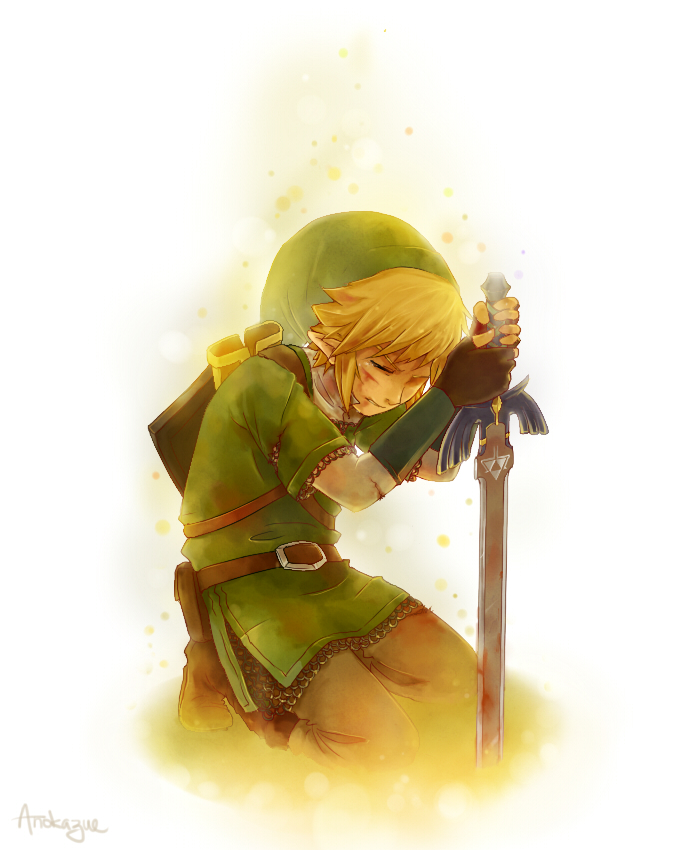
failure_by_anokazue-d4w47o2My last couple of weeks have been delegated to conventions.  First came WorldCon (MidAmericon II) in Kansas City, and then Pax West in Seattle.  While the latter is a predominantly video-game themed convention, it is not without many other elements of fandom.  Among the many panels, tournaments, and exhibitions were a few outliers, such as the indeterminate hour occupied by a panel simply titled “An evening with Patrick Rothfuss.”

Any who know me are familiar with my love for this author in all of his quirky variables. This was my third time seeing him live and he simply never becomes boring.  If you ever get the chance, please dedicate some time from your day to be in his company.  You do not even need to know who he is in order to enjoy yourself.  You can hold me to that claim.

To the point, there was one rabbit hole Rothfuss descended during his panel which caught my attention more than anything else.  I cannot remember what exactly prompted this discussion, but it was during a Q&A.  The subject was about the perception of writing as a hobby versus writing as a profession, and how there is an unfairly strict expectation attached to the relationship between the two.

author_patrick_rothfuss_-_h_2015
The Great, Bearded Badger, Patrick Rothfuss.

Paraphrasing his words: “Writing is really unfair, because it’s the only hobby where, if you don’t make it professionally, you are seen as a failure in the public eye.  Never do you see somebody playing basketball and think they are a loser because they aren’t in the NBA.  Never do you see somebody gardening and think, well, if they aren’t on Home & Gardening, then they clearly didn’t make it.  The gardener is allowed to enjoy gardening because it gives them satisfaction and joy.  But god forbid, if you’re a writer and haven’t published anything, then you’ve wasted your time.”

There is a titanic burden placed on writers (and most creative arts, really) to become published or publically recognized.  Naturally, this is not going to be a common end for most who aspire for it, as not everyone who writes (read: many, many people) will become professionals at the craft.  Why are those people then labelled as failures, when they are doing something they love?  Now of course, if the writer has a deliberate goal of reaching publication and do not reach it, at this point they might be considered having failed at least in that regard.  But writing should not be, as a primary approach, treated like a business.  This isn’t to say it can’t be a business, only that it shouldn’t be business first, creative endeavor second.

I’ve never felt like I was wasting time in my writing.  Even if I never get published, writing has afforded me an outlet for thoughts, emotions and stress which I haven’t been able to get out by any other means.  For that alone, the journey has been worth it.  I do aspire to reach publication one day, for at least one book, but I won’t consider myself a failure if I don’t make a career out of it.  I’ll still continue to write, because I love it.  I may not always like it, per se, but I’ll always love it.

So please, if you write, or paint, or craft in any way that is seen by others as following in a similar social stigma, do not lose heart.  Even if your story never sees the public spotlight, do not believe yourself a failure.  As a whole, we struggle enough with depression and anxiety and self-deprecation as is, so we needn’t pile onto the weapons against us.  To do so is disrespectful to the art, toxic to your soul, and above all, a lie.

God bless and take care.

(If you want to check out Patrick Rothfuss, I suggest beginning with “The Name of the Wind,” the first in a projected series of three novels.  Both it and it’s sequel, “The Wise Man’s Fear,” may be found on Amazon.)

Image provided by Anokazue from Deviantart.
http://www.deviantart.com/art/Failure-295808978

The Puppet Masters (#3 On Writing)

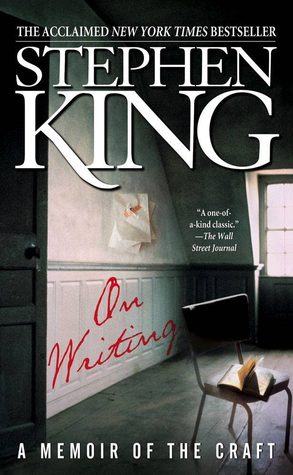
10569I recently finished my first read of Stephen King’s “On Writing.” I say first, because now that I’ve made one lap I’ve grown convinced this needs to be a part of my annual agenda. Maybe I’ll make it a consistent tradition for my wayward summers. Like I have anything better to do.

Well, I suppose actually writing would be a better thing to do. Hmm.

Anyways, with this installment I’m going to outline a couple of passages or ideas King details in his book. These are only a few of the things which glared out and demanded attention. I promise there were more, but I can’t go and reproduce the entire thing for you. That, my friends, is cheating, and I’d be stealing a wonderful opportunity from you to read these words in their original, glorious context.

First is the concept of “Write with the door closed, rewrite with the door open” and it’s pretty clear-cut.  In short, we are easily distracted during the first draft of a manuscript, not only by environmental stimuli, but our desire to have others read the material.  Resist this urge.  The first draft is for you, it’s so you may explore yourself and your story.  You are trying to fulfill your story and characters as thoroughly as possible alongside yourself.  Only once the first draft is done should the door be thrown open to welcome readers and critics alike.  This is the editing stage.  Exploration is over.  Now it’s just about the grind.

Second, and I am choosing to quote this one directly as I lack the forwardness to extrapolate correctly, is King on the subject of our temperament when approaching the craft of writing:

“You can approach the act of writing with nervousness, excitement, hopefulness, or even despair–the sense that you can never completely put on the page what’s in you mind and heart.  You can come to the act with your fists clenched and your eyes narrowed, ready to kick ass and take down names.  You can come to it because you want a girl to marry you or because you want to change the world.  Come to it any way but lightly.  Let me say it again: you must not come lightly to the blank page.

I’m not asking you to come reverently or unquestioningly; I’m not asking you to be politically correct or cast aside your sense of humor.  This isn’t a popularity contest, it’s not the moral Olympics, and it’s not church.  But it’s writing damn it, not washing the car or putting on eyeliner.  If you can take it seriously, we can do business.  If you can’t or won’t, it’s time for you to close the book and do something else.”

Third is a matter of profanity in the craft. Quoting British television’s Downtown Abbey: “Vulgarity is no substitute for wit.” Authors of all walks and moral standings have gone back and forth on the topic of how much (or how aggressive) profanity should be in their works.  If you’ve ever read a King novel or heard him speak, you know this is not a man who shirks away from dropping a couple bombs when he sees fit.  However, when it comes to writing he has a strong philosophy to back his usage of curse words and otherwise derogatory terms.

ngbbs54a7061c771fa
Mmm, yes. Quite.

According to his mother, profanity was the “language of the ignorant.”  However, there were holes in her own constitution about this matter.  A sharp stab of pain might prompt an “oh, shit” or what have you.  Likewise, few people have an idle tongue when their kid is about to accidentally hurt themselves or when you drop a huge pot of spaghetti sauce onto the carpet.  Chances are, if only by gut reaction, most people are going to swear when these things happen.

“The Legion of Decency” as King calls it, might not like the word damn, and you might not, either, but sometimes you really aren’t given any other choice?  Why?  Because to use a softer word, in certain contexts, is both dishonest and disrespectful to the intelligence and maturity of your audience.  Slam a hammer on your thumb and you stand a better chance of hurling some choice words than substituting it with “Blast it!”  No.  Few people are going to have so mild a response.  Not that it’s impossible obviously, just not common.  If you substitute “Blast it!” with “Damn it!” because you wish to avoid the wrath of the Legion of Decency, you are breaking the unspoken contract between writer and reader.  You have promised to express the truth through your characters and how people act.

To do otherwise because of the judgment of a few is both cowardly and intellectually dishonest.  If you want to get away with books with no vulgarity, you either must write-in some extraneous reasons to the story as to why, or consider a career in middle-grade writing (Not a condescension, an actual recommendation).

Fourth and finally, King writes about how he once heard that all novels written are actually letters aimed at one particular person.  Each writer has a specific individual in mind when they write their stories.  King even mentions how he’d met a man who wrote for their friend who’d been gone for over fifteen years.  King considers people like that the exception rather than the rule, as most people write for a spouse, friend, or, you know, someone else who is actually alive and breathing.  I just found this an interesting concept considering the promise I made to Christina two months ago.  Glad I’m not the only one who is writing for somebody no longer with us.

Those are the four points I wanted to unpack. If you want to read more about each of them, refer to the source material of On Writing by Stephen King. There’s all of this and much more to be found within those pages for both the aspiring writer and somebody who simply enjoys reading in general.

God bless and have a good day.

“Brother, My Brother” – Original Horror Short Story

Mama-2013Willa was born to Andrew and Annie Foreman in the winter of ‘93, only months before they’d put a down payment on their first house.  She was a spirited thing.  Annie always jested their daughter was to be the second coming of Karen Carpenter, for she had a humble, stirring voice and was never short of hitting everything in arm’s reach. Willa was prone to smiling, carrying herself with the firstfruits of a southern belle, and laughing at everything in the childlike freedom that came with not needing to worry about whether it was appropriate.

‘99 was not a good year.  Andrew found himself downsized from his position at the laundering press where he’d just begun to think he’d made enough leeway to begin an ascent up the ladder.  The couple grimly entertained the idea of foreclosing on their home of six years, when fate made the decision in their stead.  Andrew and Annie were on a date when they’d received a call from the baby sitter about a smell of gas.  Nothing major, so Andrew dismissed it.  She was likely mistaking the smell for electric burn, since the heaters were just turning on for the first time since autumn.  He instructed her to close up whichever room was the culprit, and decided he’d take a look when he got home.

An hour later half the house went up.  The babysitter was cursed with winding, third-degree burns.  They held Willa’s funeral procession four days after the accident.

“It’s okay, it’s okay,” well-meaning family would console, “She’s in a better place now.”

It was an exercise in tolerance mostly, for Andrew to refrain from rolling his eyes at their ignorant sentiments.  ‘A better place’ was not here.  ‘It’s okay’ was not I’m sorry you lost your daughter.

Of course, they would try again for a child, eventually.  If not before Andrew and Annie shared some bouts against some new, fledgling demons.

“Hon,” Annie came home from work one day, “Why is there alcohol in the basement fridge?”

“I dunno,” Andrew shrugged, head already half-inebriated from the second bottle of scotch.  “Just felt like something worth getting.”

Her expression was equal parts understanding, and kindling fear, though it was hard to tell if something else might be hiding beneath the miserable, grey swathes under her eyes.  “You haven’t had a drink since college.”

Andrew shrugged again.  That was his response for the first few months, before he started getting violent.  To his grace, he’d managed to pull back from the habit before doing any irreparable damage to his world.  He almost hit Annie.  Almost.  The sober part of his pride drew a line in the sand, and he killed the vice where it stood.  The following week of cold turkey was an affliction unlike any he’d endured in years, but he made it through on his mind’s recycled fiction where his daughter kept asking him why he hit mommy.  That illusion, that salvation, was convicting enough to recover from the brink.

Annie’s demon was a bit more stubborn, as it was fond of being a quiet, personal apocalypse.

In the beginning, Annie wept a lot.  Then not at all.  Hours of sleep would be sacrificed to restlessness, only to be answered by days of bed-ridden apathy and slumber.  Andrew hadn’t thought much of this, as his behaviors were much the same, albeit less extreme.  Annie was saddened by the loss of Willa, but of course she would be.  It was her daughter.  Perfect, perky Willa stolen away in one fiery blast.  But ‘saddened,’ Andrew eventually decided, was a pitiful and inadequate term.  Annie was not saddened, she was obliterated.

Andrew thought he’d been grieving hard over the loss, but in comparison to his wife, he was merely inconvenienced.

It didn’t really strike home until Annie tried to kill herself.

Andrew returned from a day of job searching to find his wife seizing on the bathroom floor, a bottle of Tramadol empty of its guts in the sink.  Through her gasps, convulsions, and implosive spasms, Andrew eventually managed to shove his hand down Annie’s throat, upending the drug in one ugly, caustic purge.

After a trip to the hospital to make sure she would be able to filter out what of the substance her body had already broken down, Annie and Andrew both promptly went to recovery therapy, Annie for her depressive grief, Andrew to figure out how he might better help his wife.  It was a slow crawl, but over a year, they saw progress.

Around that same time, Annie became pregnant again.

It had no reason to be a surprise, but the shock met them anyways.  Nonetheless, the months traveled by in relative tranquility.  As Annie’s belly swelled and grew taut, Andrew finally found a substantial source of income and they were able to trade their one bedroom apartment for a condominium on the far side of town, closer to Andrew’s place of work.

Appointments came and went like the tide.  The baby was healthy.  The baby was a boy.  They named the baby Shae.

Little Willa thought Shae was a wonderful name.

Shae was born to Andrew and Annie Foreman in the summer of ‘01.  He was a quiet thing.  Andrew would have remarked how his son might have been the second coming of a great athlete, or perhaps something academic, like a surgeon or attorney.  But Drew had far too much on his mind to concern himself over something like that.

Nowadays, it was all the couple could do to make sure Willa did not take their son away.

In the delivery room, Annie’s life had nearly gone forfeit.  Shae was hard on her body, exacting more than one technical complication during the procedure.  It was a hideous eight hours spent in that room, a seemingly timeless miasma of physical and emotional strife for everybody present.  You’d think a complicated delivery would be the worst of it.

Minutes after Shae had finally been evacuated and placed in the doctor’s hands for sanitation and all other medical protocol, Annie shrieked in terror, stiff-arming one finger towards the foot of her bed, eyes peeled back in an alertness uncommon to those who’ve just delivered.

Everybody turned, but only Andrew saw.  A nine-tailed hook caught his stomach at the sight of his daughter. It struck with such vigor that his subsequent throttle backwards into the wall nearly brought a nurse down with him.

Willa stood idly at the foot of Annie’s bed, watching her mother, seemingly undeterred by the aghast drain of color in her mother’s face.

Their daughter wore the same outfit as the day she died.  Black overalls on top of a baby-blue longsleeve shirt, embroidered with stars and whorls of white.  The skin beneath was mangled and bloodless, her complexion so ashen you might actually mistake it for the namesake of the word.  Burn scars clawed against her face and arms like brambles, skin ripped up and then melted down into a new geometry.  One eye had been sealed shut by the skin around it, which had dripped in its molten state and apparently cooled into a mask afterwards.  The hair, the beautiful hair Willa got from her mother, was inexplicably perfect in shape, albeit grey as a chimney pyre.

“What’s the matter?”  The lead doctor asked Annie, who was still stricken with terror for the undead girl at her feet.  He followed her finger again, back and forth, looking for the subject of her attention.  It was evident he saw nothing.

Annie began to babble, scream, and cry.  She kicked and drew her feet back despite the pain parading through her legs, core, everything.

Andrew, on the other hand, was a little more composed.  He simply recycled the same handful of choice words until they’d become something of an obsessive chant.

As could be expected, the doctors didn’t know how to handle this sudden onset of insanity among the new parents.  They exchanged glances with one another, fear, confusion, and helplessness thick in the way their brows furrowed and hands trapezed through the open air.

Willa turned to face her father.  The marring of her scars pulled down on the lips a little, making a subtle, perpetual frown.  Her one good eye was the same lattice of gold and brown she’d always had, which felt more like an insult to her absent mortality than a grace.  She cocked her head to the side, burned skin straining against her jaw and neck.  Without flourish, she looked up.

A nurse walked into the room, Shae in hand, blood having been swabbed and cleaned from his newborn body.  He was a ripe pink, with a peacefulness on his face to betray the journey he’d endured only moments before.

“Brother, my brother.”  Willa said through a filtered voice as though her throat was full of sediment and moss.

The panicking continued.  The swearing continued.  The confusion continued.  When they tried to explain the apparition by their bedside, even when it was both parents united under one front, their words fell upon ears of ignorance.  To their relief and perplexity, the phantom girl left shortly after, flickering out of existence with just as much haste as she’d come.

If not for their mutual experience of the event, both mother and father might have thought the other mentally unsound.

They left the hospital a couple days later with Shae, and a stark recommendation to wring out their nerves.  For a period, Willa did not return.

No, when she did decide to make visits, they were frequent and without pattern.  One night, Annie might walk in on Willa standing over Shae’s crib, watching her brother.  Possessing over him, you could argue, as one might when they were watching something very intently, observing change.  Watching an hourglass.  Then she’d depart for days, weeks, months without trace or mark upon the world.  That is, other than the deep wounds of confusion she left on her parents’ hearts.

Never in the first four years of Shae’s life were Andrew and Annie able to figure out why their daughter plagued them, let alone how.  She was a walking denial of most philosophies and theologies, so seeking advice from therapists and clergymen was as fruitful as the parents could have expected.  Time and again they were met with scoffing, gentle skepticism, and invitations to find help (with someone else).  A considerate ear, even a humorous ear would have been a great relief, but all were in woefully short supply.

Willa did not speak much.  Only a handful of phrases, each sounding as though the girl had just finished drowning only a moment earlier.  “Brother, my brother” seemed to be her favorite, but there were others.  “I’m here for you,” and “You have such a pretty name, Shae,” and “Shh, shh” whenever he would cry.  Once, when Annie was breastfeeding, Willa appeared and asked “why did you never do that for me?”

That was the first time Annie screamed, not because of Willa, but instead, at her.  “What do you want from us?”  Then, having already found her brave anger, “Leave us alone!”

If this bothered the spirit girl at all, she betrayed nothing.  Instead Willa walked forward until face-to-face with her mother.

“I’m lonely here.”  Willa said.  She looked at Shae, then back to her mother.

Willa did not return for months after that, but she didn’t need to.  The unspoken ultimatum lingered behind with Annie, who, being unable to shoulder the burden alone, spilled it onto her husband as well.  Their daughter—no, they could no longer think of it as their daughter.  This creature, whatever crooked thing it might be, was not Willa.  It was a spectral perversion of something beautiful.  Their shining, smiling little girl, now cold, lips frozen into a melted frown.

It was not Willa.  But it did want to take their son away.

The day Shae turned six, the same age Willa was when she passed, the demon appeared again.  It had been so long since they last saw the corruption of their daughter, both Andrew and Annie thought she might have been gone forever.  They knew in their bellies that she was not, but they’d hoped.  They hoped in vain.

At the park, amongst his friends, Shae was made conscious of a strange girl.  He’d never met this girl, but somehow recognized her all the same.  She was funny-looking, at didn’t take her eyes off him for a very long time.

Andrew certainly recognized Willa, because he hated the masquerade that she was.  As every time before, she was a ghost among the rest, incorporeal and imperceptible to the ignorant passersby.

“Willa!” Andrew yelled, more to distract her than anything.  Willa did not acknowledge her father, and Shae seemed so enraptured by the girl with the burns to even notice he’d said anything.

“Brother, my brother,” Willa said, sadly peaceful.  “Want to come and play with me?”

She reached out a hand to be taken.  It was wrinkled and grey, with singed fingernails, black at the bases.

Shae seemed to regard the hand as something with a mysterious, curious quality.  Andrew saw in his son’s eyes the desire to take hold, if only to know what it felt like.  Andrew sprinted at them from his place among the other parents, and managed to intervene just as Shae started reaching for the hand.  He pulled his son up off the ground and spun him away from Willa.  There was a crowd watching, uncomfortable and written with concern, witnessing the father and son’s game of charade.

“Get the hell away from my son!” Andrew snapped at the girl, her one open eye irritated and unimpressed.

Gasps filled the air around them, onlookers aghast.  Andrew blinked and Willa was gone, replaced by another little girl, one of Shae’s friends from the party.

It was not a simple task convincing the parents that he was right of mind, and frankly, Andrew did not care if they believed him.  No, his concern was that Shae was now aware of Willa’s existence, even if he did not fully understand who she was, or what she was supposed to be.

Andrew and Annie did not even understand what she was supposed to be.  But still, they took his questions in stride, mostly to gloss over the mounting curiosity with each successive prompt.

“Who was that, dad?” and “Why did she call me her brother?” and “She looked hurt, why didn’t we help her?” and “Why shouldn’t I touch her?”

“Because she’s a stranger, honey,” Annie would cup Shae’s face, “We don’t talk to strangers, remember?”

“But you know her,” Shae would rebuff, “I’ve heard you and dad talk about her.  You said her name is Willa.”

To make things worse, he started to learn.  Annie remembered catching her son watching a movie on television, Tim Burton’s Corpse Bride.  In it, he saw dead people, their skin a similar complexion as the ghost girl from the park. They didn’t talk about it, but Annie knew her son was putting pieces together in his mind, threading a large, supernatural tapestry.  That girl he saw in the park on his birthday was dead.  His dead sister, maybe?  That’s why nobody else could see her.  That’s why mom and dad were scared of her, because she’s a ghost and ghosts are supposed to be scary.  But Willa seemed nice.  She only wanted to play.  I like to play.

Willa showed up again only a week or two later.  Shae was sitting in the back seat of the car on their return trip from the grocery store.  In his hands, he fumbled with a toy replica of Sully from Monsters Inc.  Willa materialized in the open back seat, hands folded neatly in her lap, regarding her brother.

Annie jolted for a moment when she saw the apparition in the rearview mirror, but managed to compose herself.  She reached over to Andrew in the driver’s seat, tapped him on the arm, and gave him a look of deliberate intensity.  Her eyes cut to Willa.  Andrew followed them.  He looked back at his wife and nodded.

“Good afternoon, Willa,” Andrew smiled.  “How are you?”

The specter turned its attention on the parents, face placid and wreathed in old wounds.

“I’m lonely,” Willa said.  She turned back to Shae.  “Would you like to play?”

“Willa,” Annie said, “I’d like to play.”

Again, the Willa spirit faced her mother.  Her one eyebrow knotted.

“I would like to play,” Annie’s voice shook, but she managed.  They’d practiced.  She could do this, she knew.  “What do you want to play?”

Willa blinked with her one eye.  It was a slow, consuming blink.  “I…don’t know.”

Shae watched on with that same morbid curiosity that followed everything involving Willa.

“You always liked to sing,” Annie pressed play on a CD in the car.  Journey began to invade the airspace.  It was something Andrew and Annie would often play during car rides, and so Willa had grown accustomed to it while she was alive.  She enjoyed singing along, especially to the tune “Don’t stop believin’.”

If ever Willa had seemed staggered, it was now.  There seemed to be an unsettling conflict within her, a typhoon of the child she had been versus the monster she’d inexplicably become in death.  Her mouth opened with a word, she closed it, that word lost to the void.

“Why?” She said after a lull.

Annie looked over at Andrew.  The bump of the car as it crossed between roads and the existence of a world outside the vehicle was all but forgotten, sacrificed for the sake of focus.

“Why what, sweetie?”  Andrew said.

Willa shook her head and made a low tumble in her chest.  “Why would I like to sing?”

Annie smiled, and was surprised by the genuineness of it.  “Because,” she said, “you’ve always had a beautiful voice.”

Shae’s means of staring at Willa was so severe it was borderline frightening.  But his parents had talked about this, too.  They talked to him, told him about his sister.  “Hi, Willa,” he said, not smiling, but not frowning, “I want to hear you sing.”  He turned to his parents.  “Can I hear her sing?”

Andrew nodded.  “Only if she wants to, bud.”

Willa’s lips pursed, her one eye darting around the car seat in front of her, as though looking for an instruction on how she should behave.  “But,” she garbled, “How?”

“Like this,” Andrew said, picking up the lyrics, lifting the timbre and cadence of his throat.  “Just a small town girl, living in a lonely world…”

She took the midnight train,” Annie rested a hand to her chest, projecting her voice, “Going anywhere.”

They began to sing together.  Eventually Shae joined with them.  Willa cast suspicious, but hopeful glances among everyone in the car.  Then finally, when the chorus arrived, she joined.  It was a creaking, skidding ensemble, but she sang.  Her throat rattled as though filled with lead bubbles, but she found the enthusiasm.  The skin outlining her mouth was taut when she drew it wide to sing, but it did not rip like one might suspect it would by appearance.

“You sing really well,” Shae said, “I think you have a pretty voice.”

Sad admiration, or perhaps longing for appreciation, filled the girl’s dead face.  “You think so?”

“Yes,” Shae smiled.  It was not a smile on the hinge of bravery, or clambering to satisfy.  It was a wide, I want you to believe this because it’s true sort of smile.

Willa did not smile.  She looked back to the front, Annie waiting to meet her gaze.

“I’m lonely,” she said.

Annie shook her head.  “You can’t take Shae-”

Willa’s attention grew sharp and cold.

“-but you can come and play with him whenever you want.  You are still our daughter,” Annie said.  “We want to love you again.  We want you with us.”

“Can I,” Willa chewed her lip, a film of black around her gums, “Just stay?”

Annie blanked and screwed her eyes onto Andrew.  He hesitated, attention fiercely locked on the road, mind a million miles away.

“Of course you can,” Andrew said after a few beats.  “If you give us a few days, we’ll put together a room for you.  We can have dinner as a family again, all four of us.”

A satisfactory script of trust deployed across Willa’s face, her scars fighting against the upturned curl in her lips.  “Okay.”  She nodded, a small vein of moisture in one eye.

Then she was gone.

As promised, Andrew and Annie started making up the spare bedroom to be Willa’s.  They weren’t sure what they were doing, or how, but they’d figure out a way to make it work.  Maybe she wasn’t as she used to be, but it was still their Willa, and they would love her the best they could.  They ought to consider themselves fortunate.  Not every family gets their daughter back.

Even if she couldn’t eat.  Even if she couldn’t sing.  Even if sometimes Andrew would wake up to her, standing at his bedside, watching him sleep.  Even if she still reached out to Shae sometimes, as though some demon controlled her fingers, demanding that she try to steal him away, her expression estranged and like steel.  Shae knew not to take Willa’s hand when she became like this, but the curiosity in his eyes could not be dodged.  It was all his parent’s could do to alleviate his interest.  Willa was good, they would say, but she was not entirely herself.  Something wanted to drag them to a dark place where nobody returned.

Willa and Shae were happy with their parents, Andrew and Annie Foreman, in the winter of ‘07.

Only God knows how long that was going to last.