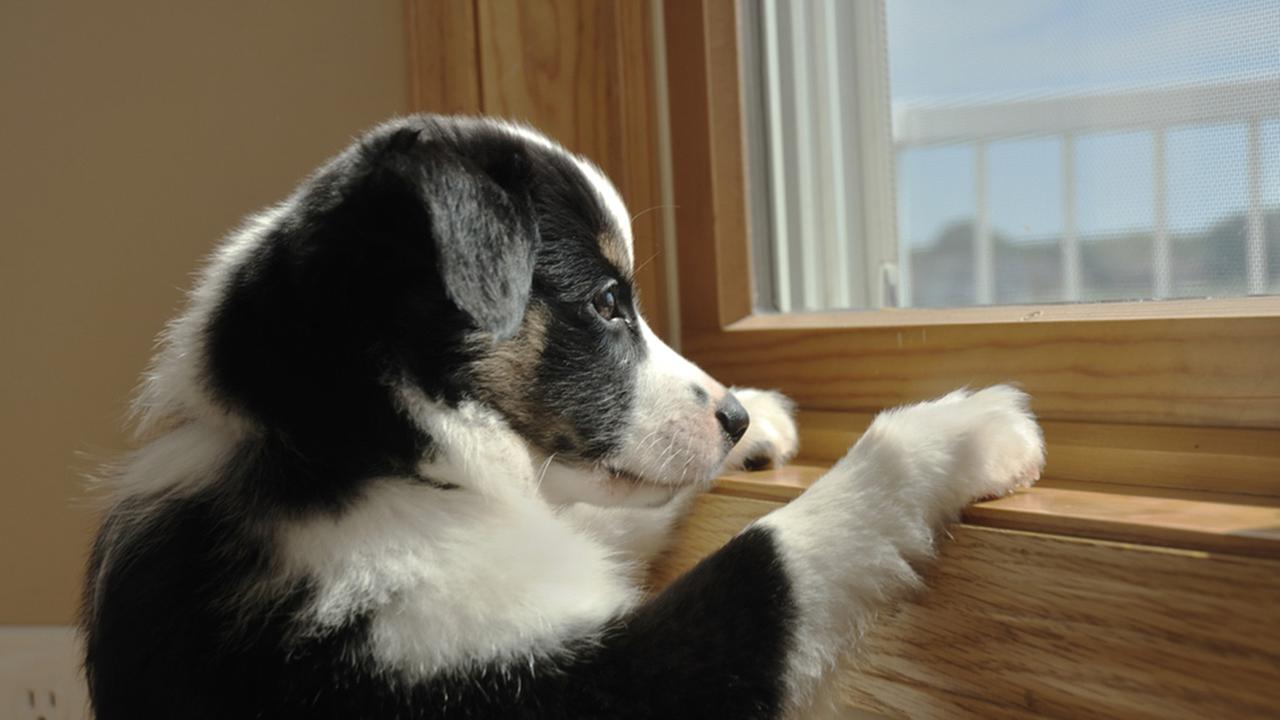
“Papa’s Little Girl” – Short Story

454440_1280x720

It just doesn’t seem fair, you know?

I mean, I don’t hold anything against you.  How could I?  You are guilty only of good things, papa.  The warm night snuggling beside you or at the foot of your bed, I loved those.  They were some of my favorite things.  Not to mention the treat you’d grant me from your very own hand, and that smile when you’d drop, look me in the eye and say “That’s my girl,” with a comb of your fingers through my hair.  That was my favorite, too.

It’s hard not to love you, papa.  I know when I was young I had brothers and sisters.  I remember them vaguely, but I remember.  You took me home with you, so I haven’t seen them in a while, but that’s okay.  Maybe I was scared at first, being removed from my family. Scared of you. I can only hope my siblings were also blessed with such wonderful papa’s.  Thank you for making me safe and not scared anymore.  Thank you for sharing your home with a clumsy little girl like me.  Thank you so much, papa.

Papa, I’m still not sure why I’m not allowed to be a mama someday. I went to sleep around some strange people and when I woke up, well, it just hurt.  Something was wrong inside of me too, I just hadn’t figured out what at the time.  I’m not questioning you, papa.  I know you only want what’s best for me, but I still get sad sometimes.  Is that okay?  Am I allowed to be sad when I have such a great papa?  I just…I don’t know.  I wish I could be a great mama, too.  I wish I could show little puppies all of the love that you showed me.  I wish so bad to be as great as my papa.

It just didn’t seem fair back then.  Papa, you’re a good guy.  I’m sorry you get hurt sometimes.  Sorry the job people didn’t want you anymore.  Sorry that woman didn’t love you.  The tears you cried into my head were warm.  They made me want to cry, too.  When you kept saying “Why am I not good enough?”, I knew you weren’t talking to me, but papa, I wanted to answer so bad.  I wanted to tell you exactly how good you were.   That you were friendly, and funny, and made the sun sparkle, and worth the trust of all things in all the whole wide world.  You deserved the best friends, the best family.  I wanted my papa to be happy so bad it hurt.  I’m sorry I couldn’t help, papa.  You were the best papa a little girl could ask for, and it made me sad that I didn’t know how to tell you.  I’m not very good with words, papa.

But even though you got hurt sometimes, you never gave up.  Papa, that’s what’s great about you.  That’s why I’m proud to call you my papa.  You got a new job, a better job, and you stopped asking if you were good enough anymore.  It helped you be happy again.  Then you bought me my stuffed bunny toy, Squeakman.  I love Squeakman.  Even now, he’s still my best friend, even if he doesn’t squeak much anymore.

But even better than Squeakman was your face when you met mama.  I remember when you came back from your first date.  Oh papa, how you smiled!  You picked me up and spun me around and laughed with a full heart.  The spinning made me dizzy, but I’d be dizzy for a million years if it meant my papa could be happy.  Mama was a good lady, I knew.  We shared that same feminine instinct and class, so there was no doubt in my mind.

So papa, I know you’re no dummy.  That’s why I knew you’d propose to mama.  I’m sure the wedding was beautiful too, but I couldn’t go.  Nah, papa’s little girl was starting to feel tired lately.  That’s okay.  Squeakman and I celebrated from afar and eagerly awaited your return.  I was only sad once, the whole time you were gone, when I thought about being a mama myself.  But it passed and I remembered how happy my papa was.

Our new home was bigger than the old one and full of new smells, so me and Squeakman made a day of exploring it when you both went to work.  We found a secret lair beneath the deck, I chased two squirrels out of the yard, and we introduced ourselves to our neighbor Sammi.  She’s a bit of an airhead, but I like her.

Papa, you have no idea how my heart fell through the floor when mama got that call you were in the hospital.  They said it was an accident and you’d need surgery.  Papa, it just wasn’t fair.  I wanted to go and be by your side so bad, I would have turned over the world to find a way, but mama said I couldn’t come.  I didn’t want to disobey mama, and knew she had her reasons, so I stayed, though my soul was in tatters.  I paced, and cried, and prayed to Big Papa that you’d be okay.

I’m really thankful to mama.  She was there when I couldn’t be.  I knew she was good, but to think she was also the best.  She was the best mama a little girl could ask for, because she knew how to take care of you, papa.  I know she was the best, because once you got better and she was out with her friends for the night, you cried with me.  You cried and thanked Big Papa for sending mama to help you through life when it got hard.  I didn’t know you could do that.  I didn’t know a person could cry and smile at the same time, but you did it papa.

I saw you do it again a while later, when Little One was born.  I saw you cry, but not because you were sad.  No, you might have been even happier than ever.  I was happy too, and not just because of how Little One made you smile.  Little One helped kindle an old fire in my heart.  If I couldn’t be a mama myself, then I would help my mama protect her Little One.  I would do it with all of my heart.

Watching Little One grow was one of the best things in my life.  You were a great papa to us both and I loved showing Little One that you didn’t need to be afraid of people like me and Sammi.  People with four legs.  Thank you for allowing me to be there when Little One began to walk.  Thank you for letting me be a protector when you were gone.  I promised that until the day I die, I would never let any harm come to Little One.  On my honor as a mama.

But as Little One got bigger, I started to feel something strange. Papa, it happened every time you came home from work or kissed mama.  It happened every time you woke up in the morning and began to move around.  There was something wrong with all of it.  But the problem wasn’t with you, papa, it was with me.  I was broken.  I was changing and you weren’t.  The stairs I climbed to reach your bedroom, they seemed further apart, but you didn’t think so.  My legs which helped me run to your side everyday were made of heaviness. Why didn’t your legs seem heavier, papa? Why could you still run when I could not?

Eventually it became too much for this little girl.  I tried so hard to keep up with you, papa, but you were moving too fast.  Everything hurt and I was always tired.  But why?  All I wanted was to stay by my papa’s side.  Why couldn’t I do that anymore?  What was wrong with me?  It just wasn’t fair.

One day I woke up when Little One accidentally fell on me.  My body hurt something incredible.  I knew it wasn’t Little One’s fault, because I’d felt the pain growing deep inside of me for a while, but suddenly I couldn’t move.  I could barely even breathe, papa.  Do you know how scary that is, not being able to breathe?  Thank you for taking care of me though, and please let Little One know it wasn’t their fault.  I was a broken little girl.  I take full responsibility.

Still, it just wasn’t fair.  You took me in to see that doctor person.  I didn’t like that doctor person because he smelled like the people who stopped me from being a mama, but I trusted you knew what was best.  He placed cold things all over my body and shined a bunch of painful lights into my eyes.  He asked you to sit down in the chair so you could talk, but I knew what he was going to say.  I was starting to get the feeling that I wouldn’t get to leave with my papa today.  The words he used were big and confusing, but I understood the fear in your face.  He said I was broken, didn’t he?  I was too “old.”

What is old, papa?  Are you old?  Please don’t become old, it’s really not very fun.  I hope Little One never becomes old.

You left me with the doctor person for the night.  Papa, that was the loneliest night of my life.  I was so scared and I only had Big Papa to comfort me.  I could do nothing but lay down and wait and hope you’d come back when the sun rose again.

Thank you for coming back.  Thank you for bringing mama and Little One to see me.  This is going to be the last time, isn’t it?  I can tell because nobody is smiling.  I mean, you’re trying to smile, but you can’t trick me, papa.  I could smell your sadness when you stepped through the door.  I can feel your heart breaking, just like mine.

Papa, did I ever tell you how much I love mama’s voice? It’s so tender, like she’s apologizing to Big Papa for every bad thing everyone has ever done.  It’s so sweet, like a magical rain made of candy.  You are so special to have her, papa.  She’s a better mama than I could ever be.  Please take care of her forever and always.  I know you will, because that’s the kind of papa you are.

Little One doesn’t know what’s happening, do they?  That’s okay.  I protected them, just like I promised I would.  Please keep Little One safe when I’m gone.  Please show them what love is.

And Papa, it really, really isn’t fair, you know?  Why do you not look any different?  I spent my whole life with you.  You were there from the beginning.  Had you had little girls like me before?  Will you find another once I’ve left?  If you do, please be the papa I know you are, and show them how to be happy like me.  Fill them with wonder and hope and joy.  Little girls need those things from their papas.

Because I’m old now, papa, and very tired.  Thank you for placing Squeakman beside me, so I don’t have to go alone to find Big Papa.  Thank you for being here, even though I know it hurts your heart.  You’ve always been here, haven’t you?  I’ve seen you every day since I could remember, and you still look exactly the same as when we first met. That’s not fair.  I want to spend more time with my papa, but I can’t keep my eyes open anymore.  Why are my eyes the only ones that have to close?  Why do I have to go into the dark without my papa?

It just doesn’t seem fair, you know?

“The Drums” – Short Story

There was rain. On a Hallows’ Eve, that meant something. In the shadows of the manor Whitewine, it meant something more. Whitewine was a cobweb of antiquity, and one could swear it was that way from the beginning. But there had been people once. A family of five and however many generations preceded them. Noel was a Whitewine, so she knew it to be true, even if that was long ago and time had since filled the manor with desolation. Noel was trusting and altogether knowledgeable in the stations most considered worth having knowledge. But she was also young, frightfully empathetic, and tonight, very much alone.

There was rain and it came hard. Against the ceramic shingle rooftop of the manor, it struck like an army of drummers. This was a good thing. The drone of their fall helped muffle each creak in the aged manor floor as Noel stepped within. It muted her imagination, which would have otherwise suggested there was somebody walking through the upstairs. But Noel’s mind was prone to remembering, and it remembered awful things at the worst of times. Whitewine was a family, one of her own blood. And in a time before hers, they were considered very much unholy. She would never have thought to thank the rain, because she underestimated its kindness. For without the rain, she would have heard the moans from the basement cellar. Moans very real, despite her being alone.

There was rain, but soon it might stop. Nobody was allowed in the manor without rain’s company, especially during the after dark hours. Noel knew this, but decided to take the risk regardless. The family Whitewine was notorious for their business of stealing people. Noel had learned such in the news columns of decades passed. When finally the family had been caught in evidential movements and the manor was searched for missing persons, the town militia did not understand how sundered the minds of Whitewine truly were. Their discovery led them to a home for bones and things which bled out slowly. The kidnapped persons were not wholly themselves any longer. Through rigorous and generous torture, only parts of their minds and bodies remained intact. Many were stripped nude, strung up by manacles in the cold cellar until their feet had gone black and flaky. They would beat their heads back against the cellar wall, trying to lull themselves into death. Some succeeded, others simply cracked their brains. Some were missing their tongues, eyes, lips, or ears, later found assorted in the children’s bedrooms. There were worse things than this, things that would make the devil proud, but those memories were dark and the worst representations of man, so Noel dutifully tried to forget them. But these crimes were not easily forgotten. Not by man, by God, or by time.

There was rain, and it made the air cold. Noel wondered sometimes if God forgave people like these. Did Heaven also delight in their company? She was unsure what to think of it all. But that wasn’t important now. The manor was important. Basking in its history and acclimating to its macabre silence. Except it wasn’t silent. There was always a sound of drums. The rain now making earth its pasture. There was something more to the noise, but it was lost in the rain, to her benefit. Young Noel would find the Whitewine legacy on her own very soon. Once the dust guided her down to the cellar. All in time, all in time.

Still there was rain, but it was drawing to a close. The yearning patter began to crawl to a stop, leaving all natural life refreshed and thankful. In this saturated world, hope was as alive as it sounded. And that was beautiful. But though the rain reached the manor, it held no cure for the bitter memories within. Those memories of pain and hatred and cruelty of the greatest sort. Noel remembered them from her readings, and for years her imagination had played with her, trained her for this moment. This was not good, nor beautiful, as she would soon find out. Not that she expected different from God’s worst sinners. But within her dark dreams came a whistle, something entirely unexpected because of its ferocity. Dread crept onto her the way only it knew how. With a smile and slow courtesy. The whistle was not in her mind, like she first believed it might have been. It came from the boards between her feet, twenty feet into a grave of the earth and the black heart of the Whitewine manor. Noel flinched and stepped forward, quickly finding the door to the basement cellar.

The rain died and ceased its pounding. The new absence reminded Noel of an old heart, finally giving up its struggle. There was quiet, but only for a moment, until the girl reached for the cellar door. As she did, the drums dawned again. Rather, she only finally began to hear what had always been. These drums belonged more than the rain and it was their right to stay. They thudded like a dull fist striking a table and echoed twice as deep. Noel spun the knob and yanked open the door. She was welcomed by a years-old stink. Something like wood rot and disease. The clouded light from outside filled in the cellar as she descended. There were windows, veiled by the webs of a hundred dead spiders, and everything was of tattered stone. It looked and smelled as unhallowed as she’d imagined. But the drums were different. They were a raw beat, unsettlingly alive and visceral. With the bravery of a fool, Noel began to search for that rhythm growing ever louder.

There was no rain, but still the drums sounded. As she lurked ahead, Noel was increasingly aware of her thin frailty. She was a scarecrow. All straw and thread, no spine or substance. But the drums had her. For a breath she reconsidered if it wasn’t all in her mind. That would be simple and explanative, but it would also be very untrue. In the furthest back, towards the darkest end of the basement, she found a man in suffering. Iron shackles arrested him, and they lay at his sides. Noel cringed at the slope of his body. It was as though his spine had been pulled apart and fastened into a stretch, with only his upper torso and head supported by the cellar wall. An unsettling gray crust had baked over his skin, while his jaw seemed broken and slack, swaying back and forth with each toss of his head. Both of his manacles were affixed by chain and nail to a slab of wood behind his head, forever preventing escape. Noel shivered.

Where was the rain? She wanted it back. Again and again the dead man would crack its head against the wood. It was a dull thump, thump filled with resigned defeat, something Noel took to mean that he’d wanted to die for so long, only for death to never come. Thump, thump it continued, just like the rain. Thump, thump went the drums. It quickly became too much. Maybe Noel cast herself away from that horror, that godless tomb. She couldn’t remember, even years later. Again she tried to counsel herself into believing that the Whitewine’s sins had long since ended. The dead man was just as he was, dead. A disaster of her mind, fabricated from long nights of reading Whitewine lore. It didn’t really matter. Every moment the rains came thereafter, she remembered the drums. And of course they remembered her, too. Goodnight, Noel.

“The Red Thread of Fate” – Short Poem

Spun upon my finger small
Chanced by fate’s design
Finger-hook
to the cheek
Gently, gently tugging along

Oh, curse you, red thread of fate
For evacuating my apartment
Dragging me into winter’s hymn
Sacrificing my marrows
to Mother’s song

How she catches my eye again
That delicate soul
with her glissade and spin. Dancing
on snow-touched lakebed.
A dwelling for the child in her soul
so sweet and I
can only fawn.

Calling me out here, hm, red thread of fate?
With what to say?
I fret to stay and linger
Tear you from me
If only I could
and not let my heart flutter ‘til dawn

Moonlight blessing touch this heart
Give this thumb-twiddling man
Words to weave
in spite of himself. With
confidence tempered, nice and strong

Red thread of fate, I am so afraid
But already she has seen me
there is no retreat.
I join her on lonely white sea

She takes my hand
a gesture sudden and unexpected
but hardly upsetting
We begin our own ballad
to which we slowly ascend
I voice my heart like a trumpeter swan

Spun upon my finger small
That red thread of fate holds tight
Welcomed to wrap my heart
And gently, gently tug along

“Ghost” – Short Story

In evenfall there was a ghost, one who took kindly to others, but found all his company alone. Children share their tales, as children do, about when they met the ghost and what they’d done together. About what they might do, should they ever again meet this apparition. But while their stories were only by the fond side of the heart and meant no ill, they were also the sorts of false expression expected of children. Unlike their tales, the ghost never housed a guest, as guests never made it so far into the woods without turning back. More than that, it had been a long age since the ghost last knew anything of friendship. But should any wandering souls find themselves lost in that wood, and if perchance they stumbled upon the ghost’s home, they would find something lovely. Lovely, maybe, but terribly austere and lonesome in all the gentlest ways.

The ghost made its days cultivating a modest cabbage patch, with rough carrots intermixed. This gave credence to the white-washed stone gardening walls, put up only a few years earlier. It was all that could be done to keep out intruding hare and all manner of invasive critter. A rickety sign clicked overtop the doorframe of a home that the innocent and friendly might envy. Scrawled in black ran across its face a single word: ‘Ghost’. This was its home, the only place it knew. Perhaps a mystery to the ghost, but this was also a prison. Thoughts and memories of its life were all trapped here, and for that reason, it could never leave. And because it would never leave, it would never find something new.

Still it stayed, and it was happy. Lonely on bad days, but it was a cheerful ghost with the knowledge that bad days couldn’t last. So it remained inside when the rains came and made its home well, so that when somebody might finally brave the wood and find the gentle cottage beyond, it would be ready for them. There would be festivities of the sort only a ghost could satisfy. It would be a celebration with warm, butter-baked bread and the ghost’s favorite kind of chocolate. Pumpkins might be carved with the ghost’s perfectly polished tools and marshmallows would be roasted in a quiet fire. There would be music, because of course the stranger would have a spirit for song and dance. Maybe ghosts struggle to dance, but this ghost would try. It practiced often, when nobody was looking.

But this was all just a dream, one of the happy dreams meant for a good day. Today was a laundry day, which meant it was neither good, nor bad. The ghost was thankful that it was cloudless outside. It preferred its labors at night, and night was awfully solemn without any stars. You’d think a ghost would have no need for laundry, but you would be wrong. This ghost loved each of its four sheets more than anything else in the home. They were simple, often just as dirty as they were now.

Everlasting fingers of mud had saturated deep into their white. A light tattering could be felt in the surface of each and along their edges. These made them imperfect. But imperfect was most usually the best way to have something. The ghost knew this and liked them all the same.

Sometime long ago the ghost cut little circles in the sheets. The circles were cut in pairs and, because ghosts aren’t very coordinated, they were laughably asymmetrical. Some were too high, others too low. Nearly all of them too close or too far. But the sheets were already imperfect, and so surely they understood how difficult it was for a ghost to cut proper eye holes. This only made the ghost love and nurture them that much more. So as it was, the ghost would wash them, grinning as it churned through popping bubbles and suds. The companionship of the moon made these evenings warm and before long the ghost would finish bathing its sheets.

A slash of string was spread across the yard, suspended between two rods of timber. Since the sheets would need a chance to dry, the ghost used this line to hang them and let the night air have its way. During this period it sank into a deep patience. Sometimes the ghost would sit in silence and wait, other times it might hum the progression to a sweet autumn song. You know, something red and yellow, but mostly orange. A song that smells of nutmeg and cinnamon. One of these days somebody would be sitting nearby and humming along. You don’t have to be a ghost to appreciate the small things like a humming comrade.

When finally the sheets were cured of their wetness, the ghost would pull them off the line and smile. It would smile a tender, forgiving smile. Something it learned from children’s books. Armed with that smile, it would carry the sheets over and drape them on four posts, standing no more than three heads from the ground. If assorted properly, the eye-pockets would look straight back at him. Or as straight as possible, with the ghost’s handiwork. In that moment, the ghost would fondly share its musings and happenings with the sheets. They were usually a kind audience, with a generous ear. On bad days, they never said anything. But that was alright, because usually it was a good day, and on good days the laundry would talk back. None of them bore scars of rudeness or malign gestures. Instead they were friendly, and often times their stories were better than any the ghost could tell. Together they would reminisce of young life games, younger sweetheart loves, and the adventures known to dwell in far lands and amidst the sea. Naturally there was laughter, and even though there may not have been music, they always sang.

In time a wind would come and snatch the sheets up as a futile attempt to steal them away. But the ghost had a big yard, and though the sheets might tumble and mar with dirt, it would always catch them. There would be a pang of sadness in its heart as the conversation drew to a sudden close. For a moment the ghost believed the sheet might not ever talk again. If anybody has ever lost a friend, or said goodbye for what they knew could be the final time, then they understand much of how the ghost felt during these moments. But it was a hopeful ghost, with a big heart and keen understanding. The sheets could get dirty over and over, and the ghost would always be ready to clean them anew. So it would, so it would.

Because today might be a good day. Maybe. This ghost was an ambitious ghost and not taken to long-suffering or hardship. Strangers never came to visit, so it had time to do the laundry. And once it had begun, it could sit alone and wait according to its custom. Though strangers never said hello and children never ventured near its home, if the ghost waited long enough it would always have someone that might listen. Some sheets with little holes for eyes. Some sheets that fluttered upon a post. Friends with which it could sing and not be disheartened. Because at evenfall there was a ghost with homemade friends, and nobody knew their stories but him.

“The Interview” – Short Story

“As I’m sure you’ve suspected, this isn’t normal protocol.”

I nod as I take my seat, “If we were normal, we’d be out of a job.”

If the overlord was amused, he didn’t show it. My answer seemed to satisfy him enough, but I can’t say the same for the triad of his peers, my interviewers. Then again, I knew they were a tough crowd. Any supervillain worth their mettle always was.

“Jericho here has to level a Mediterranean island this evening, so forgive us if we are attentive to time. It couldn’t be helped.” A burly oaf with skin fair enough to challenge The White Witch gave a stunted nod. I’d heard of Jericho. He was probably the least imposing of the titans before me, but still had enough experience and power under his belt to give A-class heroes a modest challenge.

As for the piece of work that had been breaking me in, that was Malachi, more notoriously known by-and-large as Utter Doom. I’d trained myself to look at his forehead when speaking with him, so as to avoid direct contact with the “Lucifer Eyes” that brought him to the top of his field. They were blank, cleaner than white, and only an accessory to his esteemed fury. Utter Doom had been around since the dawn of the supervillain, and was the standard that defines many supervillain tropes. Ironic, because nearly all of those came from his younger days and most of them are a reflection of inexperience. Nowadays it’s a rule of thumb you don’t make your ventilation ducts large enough to crawl through, and you never monologue for more than two lines.

“That’s understandable,” I said, “Thank you for the opportunity to be here today.”

Utter Doom gave a curt nod, “Of course. Let’s begin. Why are you interested in becoming a supervillain?”

I did my best to shed a practiced smile and passed my eyes along each of my interviewers, steering clear of their gazes, “As a former superhero,” I paused for an instant to take in their expressions. Good, none of them seemed surprised by this, “I have always admired the resilience of your side. You make greater sacrifices than most of the supposed ‘heroes’, and are very action-oriented. Supervillains are creative, meticulous, and have tremendous resolve. Superheroes do not do much for themselves. They simply respond to your presence. If not for you, there would be no need for the hero. I am fascinated by that instrumental importance and influence you carry.”

Doom scrawled things on the clipboard in his lap. He sat straight-backed in a black throne chair, fitted with leather. It was daunting how his expression remained. Absolutely deadpan, without the slightest tremble or fidget. “You clearly weren’t a superhero for very long.”

This caught me unprepared, “Might I ask why you think so?”

“In my experience, heroes often sacrifice just as much, if not more than the supervillains. We might be lonely, or in perpetual financial ruin, or thought monsters, but like you said: it is by our own devices. We are the proactive ones. Maybe some of us have better reasons for our actions than others, but ultimately it is still our decision to behave and act against standardized morality. We are sinister and underhanded, and many heroes are felled by our cunning and deceptiveness. Some even come to our side because of how much we have cost them. Do not underestimate the sacrifices of your enemy.”

I found myself closing peeled lips. I hadn’t expected such class and respect from a supervillain, especially towards his adversaries.

“Our records show that you were a superhero for only five years?” A new voice broke the conversation. Miranda, the only female in the office. The Queen. I nod my affirmations, “What was your region and what are your powers?”

The Queen was entirely different from Utter Doom. She weaved her words with enough restraint, but the tears of blood forever spinning from her eyes made me wary, like she would happily drive twelve blades into my heart at the drop of a hat.

Keeping your voice straight in front of a woman of this caliber was no simple task, “My first few years were largely based in central Europe, but the latter half was spent on the Eastern American shore. As for powers, I can manipulate gravity.”

This seemed to please her. “Always formidable if utilized properly,” she said.

I couldn’t stop my grin.

“Show me,” Jericho spoke. They weren’t words. They were bombs, and they blew apart both my knees and my conviction. Steeling myself, I thrust one palm forward and unleashed a hideous shockwave, one strong enough to snap pillars of stone like chicken legs. The table we gathered around blew into dust and shards, and the room was filled with a low-bass ringing like we were inside a troll’s war drum. While the hair on his flesh might have flittered, the giant was a full four-hundred pounds of not-moving. Only now did I realize that any one of my interviewers were enough to topple a nation. I had nothing before them. They were each at least ten times deadlier to the world than I was. Doom didn’t even blink. Jericho grunted, “Pretty good.”

Pretty good? Oh, man.

Until now, the last interviewer hadn’t yet graced me with a word from his unholy tongue. Honestly, I would have preferred it stayed that way. The final of the four was Famine, one of the infamous Horsemen of Apocalypse. A demon among supervillains and probably the only inquisitor present with enough spine and cruelty to stand up to the devil. “If you were accepted for the position, what methods would you take to ensure optimal damage output? What are some of your operational preferences?”

Swallowing through my heart, I persevered, “Until now I’ve been familiar with working alone or in small groups, but I feel the next best step for my career is to join an organization. Power in numbers and all of that. This will give me the first-hand experience I need for the long-term ambition of leading my own dark organization. A sort of anti-hero unit, I suppose. We will have no other purpose but to destroy those who defy us,” I paused for a moment to study Utter Doom, who seemed to be clenching his jaw quite tightly. I continued, “As for specific methods, I would abide by the guidebook of Doom’s apprentice ‘Black Stroke’. Absolutely brilliant methodology and technique, with humor and wit to boot.”

“It’s a shame he didn’t take his own advice,” Doom said off-handedly, in a slow drone, “Rule twelve: ‘Never let the hero have a last request.’ That one mistake was all he needed.”

“Nevertheless, they are quality guidelines for any contemporary supervillain,” I defended, “And as for ‘optimal damage output’ I would probably start by convincing my former companions that I was still interested in being a superhero. Manipulation and deceit are wonderful tools, even for ordinary men.”

Famine was a dirty red color in his skin, like desert sands at sunset. His skull was lined with jagged black protrusions and I wondered how he ever slept. Or if he ever slept. He pursed his lips and tipped his head, jotting down notes.

Utter Doom cleared his throat and readjusted himself, “Answer the following with as much speed and precision as possible.”

I readied myself. I’d been studying for this part.

“As a supervillain, is it better to have a son or a daughter for your progeny?”

“Neither,” I shoot out, almost forgetting the rest of my answer, “Sons are proud, and their inevitable plans to usurp me might fail, but it will almost certainly be at a critical point in time. The distraction could result in my downfall. Daughters are easily tricked into falling for the hero’s swashbuckling charm and skill, thus leading to ultimate betrayal. Though if I had to choose, I’d rather have a son. I could use his evil strength until he came of age, and then I would kill him in what looked like an accident. If he had friends, they would be disposed of preemptively, so as to waylay their possible vengeance.”

Doom was quick with the next question, “When is an enemy considered defeated?”

“When they are either cremated, or at the very least, mutilated to the point that they wouldn’t want to live. And absolutely no assumptions. If they fell down a cliff, I would personally go down with a strike team to retrieve the body and finish up a proper disposal.”

“If you had a platoon or army under your command, what sort of aesthetics would you employ in the design of their uniform?”

This one was disappointingly easy. Only the stupid villains missed this question anymore. “Grant them individuality. They might all wear one suit, but make it unique and open to slight variety and character. If helmets are included, and they should be, then they ought to reveal the identity of the soldier underneath. At the very least, the eyes should be visible. Such a simple device does tremendous things to the hero’s psyche and makes your underling more likely to survive in battle.”

Utter Doom sighed and penned his thoughts onto the board, “Straight from Black Stroke’s lessons. I can’t say they were poor answers…just rehearsed.”

“I prefer to use the word ‘practiced’. Makes me feel more disciplined and malleable.”

The Queen licked her lips, “One last question. If there were any one villain you could follow for a day, who would it be?”

“Whipgun,” I answer, aware that I might be making a poor decision.

“Whipgun?” The Queen grimaced, “The speed beast? Why him? He has fulfilled nothing but minor-league contracts, heists, and burglaries. Any hero worth their power can defeat Whipgun.”

“Because if I could follow Whipgun, that would mean I was really, really fast.”

Jericho made a tumbling noise in his chest that I hoped was laughter.

The Queen curled her fingers around the pen in her hand and looked at me hard. For a second, I thought I’d made a mistake. But my concerns melted when she smiled. An evil smile, but a smile all the same, “At the end of it, he cracks a joke. I like how you play this game.”

Doom and Famine were profoundly unaffected by the humor, but it wasn’t for them anyways. “That’s all I have,” Doom said, “Does anyone else have something they’d like to add?”

Unanimous shrugs and head-swaying across the board.

“Very good,” Utter Doom directed himself towards me, “Before we go, do you have any last questions?” He’d already begun to leave his seat, so I took that as a cue I could as well.

I wore that practiced smile like a mask of hope, “Only one. When can I start?”

“Daughter of the Rain” – Short Story

A chord of aching compassion sifted behind Ira’s chest. He unfurled one hand slowly, reaching out towards the lonely creature under the wagon. With a pout and limp, it fell back over itself. Ira drew his arms to his core for warmth and sighed.

“How long have you been here?” He cast a half-attended glance to his side, maybe looking for somebody. An owner possibly, or someone that might be able to help. They were alone, so he returned his attention to the young beast. It was longer than his arm and slender like a crystal river, smooth tufts of hair gathering where scales were absent. Ira stirred. Between its dainty paws and the mercury glow of its eyes, the fledgling creature gathered old thoughts of a runt hound from his youth.

But this was hardly a hound or even a mutt. Something in its build reminded Ira of a gargoyle, or one of those spirits from his father’s library.

It whimpered something low and rolling, scratching its broken claws into wet earth. Ira pursed his lips and settled both knees into the mud. Whatever it might be, it was hurt and made the distinct cry of having been betrayed. A sound shared by men and beast alike.

Fumbling in his coat pocket, Ira broke off a chunk of stale butter-bread. The rain reached down and made it soft. He extended the supplement until the whole of his arm was beneath the wagon, his cheek against its hardwood carapace. For a long minute there was nothing, but soon after, something nuzzled his fingers and lapped the food from his hand. It tickled. Ira dipped his head under the carriage to watch his new friend lick up the last of the bread. “I don’t want to leave you here,” Ira fell back on his haunches and cast his head low, “But I don’t know where to take you.”

Curious silver rings peered back at him, now suddenly interested, but resilient in wariness.

“I would never hurt you,” Ira said. He did all he could to keep his tone soft and distinctly motherly. “But words are fickle, aren’t they? Like water.”

To his surprise, the young creature moved closer, one leg damaged enough that it could only drag. Ira eased back into the rain, providing a space for it to join him. The gargoyle’s eyelids flittered as the rain came against them. Several deep lacerations crept along its sides, staining the surrounding fur in a blood darker than oil. A swell above one eye seemed to be in advanced stages of healing, but that was the best of it.

Reciting the importance of caution to himself, Ira made clear for the beast that he was a friend, and then reached out until they were touching. It purred meagerly and let him run fingers along the scales of its crown. “I’m sorry.”

The gargoyle rustled its jaw and came closer.

“I’m so sorry. Please forgive us. I forget how cruel we can be.”

If the creature acknowledged or understood any of Ira’s words– which it may, he couldn’t be sure it didn’t– then it would be a hideous deed of him to abandon or send it away. Ira was dirty and unwanted even among his own kin. What could he offer? If it came with him, it would die before the week closed. There was no home with warm hearth-fire to greet them. No quiet place that was safe from the rain.

Perhaps sensing his own conflict, the gargoyle slid its head onto Ira’s lap and closed its eyes. Ira heaved a single dry sob and clenched both fists before laying his head atop the beast’s own. “What is your name, I wonder?” A rhythmic, throaty tremble came from the beast. A noise and feeling like a great cat’s purr. The rain bid forth with greater fury, crushing the wagon’s steeple. The collapse startled them both, and the creature looked back to Ira with a gaze of mixed pity and comfort. An idle wind tossed the rain slantways.

“I think I have something,” Ira grinned with a trace smile like honey, “Ysuna. Hmm? A Southern word. I think it’s religious. ‘Daughter of the rain’. How does that sound?”

As woefully inadequate as Ira felt most his decisions were, this one seemed right. Seemed strong and pure. The creature must have agreed, because it licked a frothy pink tongue against the flat of his arm.

Gathering the injured creature into a cradle, Ira made a point to avoid hurting Ysuna any more than she already had been. “Come on, let’s get out of the rain,” Ira laid Ysuna on her better side, back against the inside of the wagon’s wheel. There was just enough room for him to crawl underneath the carriage and rest beside her. “We will rest here, and when the rain stops we will find someone who can help,” Ira stroked the beast’s brow, “Hold on until then, okay?”

“Disposable” – Short Story

Our team was three parts unpredictable, one part psychotic. Most of the latter belonged to me. Elinwall was stuck with an obsessive playing card fetish which would make The Joker proud. Jewel could only dance from one place to the next and only while wearing one boot. God forbid a man try to be kind and buy her some sneakers. Leveller had his eyelids burned off in a chemical blast and, since he would lose the eyes anyways, decided to toss those, too. Now the globule implants in his head, which he believed must be fascinating, were actually two of the sickest, most horrifying pink gumballs I’d ever seen. This made it easy to antagonize him, something that during the workday had become my most indulgent pastime. As for me, I’m my own brand of crazy. I actually liked all of these people.

Regarding our run-of-the-mill day, we’ve found a world-record-breaking odd-job. We eat stuff. Better yet, we eat everything that nobody else wants to eat. Or what they physically cannot.

Elinwall clapped with ugly, broken applause, a Seven of Hearts between his teeth. “Ho, lucky day. Lucky day.” Before him laid a menagerie of bodies flopped remorselessly into a pit twelve heads deep, presumably after they’d already died but with no way to be sure. They weren’t all men. Women, children, and even some animals helped fill the dark hollow. Their flesh was rotting on various stages, suggesting the pit wasn’t filled all at once. Some poor brute probably pulled the short stick and had to chuck any new dead into the hellhole. Hard to imagine people flocking on that opportunity.

“Woah,” Leveller waved a hand in front of his face, “That is quite a bitter stink, isn’t it?”

“Yeah, they seemed to have a lot of fun over here,” I answered. The surrounding urban drudgery was torn and tattered by the wars of men, punctuated by a poisoned grey and yellow sky. I could taste the hanging lead and blood, and it made my stomach grumble with curious hunger. “Jewel, I know you don’t care much for the unripe dead. Our contract has it so that we need to eat any leftover weaponry as well, if you wanted to start there. A quality carbon diet.”

Jewel licked her lips and tented her fingers, “You know the fast track to a girl’s heart, Jo-Jo,” she smiled, “I might just gobble you up, someday.”

Leveller bent over the pit and cupped a hand to an ear, “Don’t bother, hon. Have you smelled the man? His odor is worse than death,” the stock-and-muscle giant dropped his hand and took a generous sniff of the air, “Trust me, I know what I’m talking about.” Leveller reached into the cesspool of rot and snatched one body by the arm. He began to yank it free, feeling its shoulder slowly tear and give way to pestilence. Luckily it held and he managed to pull the body to solid land. It was male, young and at one time, strong. Probably a soldier. Opening his great, deep gullet, Leveller began to eat. The corpse broke apart in chunks, sucked down his throat like pebbles to a vacuum. Much cleaner and faster than the common man’s chop-and-swallow method. In a minute, everything of the boy was gone, down to the toenail. Leveller’s face twisted the way one might after catching whiff of curdled milk. “The first one is always murder.”

I moved to join him, dodging past Jewel as she did some old, South-American dance that worked the hips in thoroughly satisfying ways. I took a gander over my choice pick of dead and decided to break in the taste buds with the worst of it. I went straight for the old man, the one who some might say was already falling apart before Death’s bitter lady granted her ultimate kiss. It was one of the most unsatisfying appetizers I’d ever worked through.

Elinwall was always late to decide on his first bite. Leaning over, he scratched at a healing wound on his leg, just above the sock-line with an Ace of Spades tucked nicely within. “None of them look any good today.”

“Do they ever really look good? Just pick one and get it over with.” I was hoping that once the threshold had been reached, Elinwall would just turn into a machine and inhale most of the load himself. For being the thinnest among us, he always seemed to have the biggest appetite once it got rolling.

There was a holler from somewhere to my right. Jewel must have found something interesting. I sucked down another one of the dead. It was a shorter issue than the last, as it had lost a leg and I couldn’t find the blasted thing. Our girl gave another call, one more intentionally trying to grab my attention. I finished up the meat meal and strode to her side. My teeth flared with her discovery.

“You’ve got to be kidding me,” I said.

Neither glad, but not altogether unhappy, Jewel shook her head. “She’s young, probably five or six. I’ve tried talking to her, but the poor beast won’t so much as babble.”

Sometimes we would find live children during our dirty work. The ones left behind. That was something wars were really good at making, and sometimes I wish they didn’t. Because then it becomes our responsibility to put them out.

Because the truly monstrous thing to do would leave them as they were. Or worse, bring them home. With the world as it had become, that was its own sort of hell, and one which would never welcome a child. Killing them was a gentle evil in comparison.

“I – I mean I’ve never –”

“I know, Jo-Jo. Neither have I.”

The problem was that in our crew, killing the residue was Kingpin’s job, and Kingpin was very notably absent for a myriad of domestic reasons not worth discussing. Nobody else had ever been able to muster enough gut to end the lives of the victims, myself included. I cherished that one untainted part of my character. But I could hardly shove the task onto Jewel or one of the others. We were looking at a sticky situation in the rear-view mirror. This was bad stuff.

Especially because the girl looked so painfully adorable and worthy of pity that it would be easier stabbing scissors into your own chest than doing her any harm. Her lip quivered with an unspoken word, some call for help lost between her parents’ death and her evident struggle to cling to life. She was withered like a weed, nearing the point of true atrophy but still holding enough fat and muscle to drag out the impending starvation at least one more week.

I dropped into a crouch to meet her eyes, syrup brown and very absent. “What’s your name, dear?” You don’t ask about the parents. You never ask about the parents.

Her jaw stumbled around a word, but closed up at the last second. I sighed.

“See what I mean?” Jewel said, “Not a peep.”

The girl was in shock, of course. They usually are. I begin to look her over with more attention, scanning for any malign damage. A waterfall of bruises filled the skin of her legs and her black hair was torn away above one ear, revealing a patch of purple and red and white. Dust stained the old tear-trails under her eyes.

“Holy sh–” Elinwall promptly slapped a hand over his mouth when he found our new friend. “Oh, god. Oh, god no,” he turned away and focused on his breathing. There was a thin splatter of blood on his chin from his last meal. “Please don’t think less of me for this…” In a stroke of defensive cowardice, he touched a thumb to his nose, “I’m not doing it, Ace.”

Bending to the action, Jewel mimicked him, “Sorry, Jo-Jo.”

There was a sideways wind that tore at my ears, filling them with natural sirens. It muffled Leveller’s presence all the way until I felt his fingers plant firmly onto my shoulder.

“I will do it,” he said flatly, “I at least cannot see her. I will have no face to torment my dreams.”

“You don’t have to do that. I am abl–”

His hand waved in a gesture of hard silence and that was the end of it. Leveller reached for the knife at his side. “All I ask is that one of you cover her eyes.”

My heart sank. I looked at the girl, her face like stone, and turned away. “Of course.”

Elinwall stirred as with protest, but put nothing forth. A paper-thin card spun meticulously between nervous fingers. “Then…I suppose me and Jewel will get back to work.”

Fingers running back and forth along her arms, Jewel hurried away without him. I knew the frailty of her heart, and none of us would hold it against her if she couldn’t speak to us for a while. As she hiked away, her back was straight and her head was low. There was a stifled sob caught against the wind.

I turned my attention to the girl and convinced myself that she’d already left the world. God just hadn’t come to pick her up yet. She shuffled her weight, but did not resist when I braced my arm over her eyes. Leveller took ten deep breaths and rested the knife against the soft of her throat. Though he could not see through his gumball eyes, he tipped his head to the poisoned sky. I rolled mine into my shoulder, jaw tight as glass, and waited impatiently for it to be over.