“Just Keep Writing” – An Emerging Podcast

“A podcast for writers, by writers, to keep you writing.”

“Just Keep Writing” is, at the time of this writing, a fledgling podcast that boasts a modest five episodes. I don’t expect this number to stay low for very long. Listening to the podcast, you can tell that the two hosts, Marshall and Nick, are both incredibly passionate about elevating their amateur writing hobbies into bona fide career opportunities. Between the two of them, they cover an impressive swathe of life experiences and motivations, with previous podcasting history under their belt, and connections within the writing industry. The fruits are ripe for a long-term podcast.

Even this early in the lifespan, the podcast has gained a decent following, with an active Discord channel where fans and fellow would-be authors can communicate and learn from one another. The highlight for me so far was their interview with guest Maurice Broaddus, author of many a fantasy and horror novel, including the upcoming steamfunk adventure, Pimp My Airship (which might be one of the best novel names I’ve ever heard). In the episode, Maurice gave us some insight to the inner workings of his daily grind, as well as explored his passion in community development for the black community. If this is the standard for guest episodes, then I have a hard time believing that Just Keep Writing will be anything but successful, especially if the regular episodes keep bringing the quality writing tips and challenges as they have insofar.

If nothing else, they have at least one new fan in me.

Thoughts From the Kitchen – (#3 Ten-Thousand Voices)

I once heard a story from a musician, in which he was telling a story he heard through a musician buddy, about another musician that likely neither of them knew (assuming the subject of the story is real at all).

In this story, the front man of a popular band was looking over the crowd which gathered for that night’s show.  He was exhausted from months on the road, bitter to the state of the music industry, and overall weary of singing the same songs time and again.  Yet, when he called upon his stage persona, he did so with enthusiasm and purpose. When he presented himself to the thousands of people before him, jumping and hollering along with the words he sang, he did not let his bitterness influence his performance, and for quite a simple reason:

He believed in the message of his song, and every single one of the ten-thousand voices in that sea of faces were singing for a different reason.  A unique and personal reason.

I like this story, because it acknowledges how we internalize narratives and meanings independently from one another.  Even if the overall narrative leaves little to the realm of subjectivity, the experiences we bring to the table will be rife with our own specific purposes and struggles.

“Just a small town girl, living in a lonely world.”

The sole identifying emotional word in that famous Journey intro is ‘lonely.’  If you fulfill the ‘small town girl’ aspect and feel lonely, this automatically applies to you.  Yet, you could be a small town girl, and be lonely for a completely different reason from the first person who identifies with the track.  Even more, you don’t need to identify as anything, and can simply appreciate the somber tone of the song on the mere grounds of acknowledging that yes, the world is lonely.  So on, ad infinitum, until near-most everyone has a different purpose for lifting their voices in harmony.

Writers have a similar power (yet, entirely different, as music is it’s own beast).  When we write, it’s in the ultimate hope of submerging the head-space of the reader into our world, our rhythm, our timeline.  If we are successful, especially in characterization, then we create a similar effect to the singer on the stage.

Think of your favorite character. The reason they’re your favorite is likely different from why they’re someone else’s favorite. Even if your surface-level reasons are the same, the nuance and personal element behind them can vary infinitely.

This is why we we sing, write, and create. Because art is the only thing capable of this, this relationship between expression and perception.

Update: 03/21/16

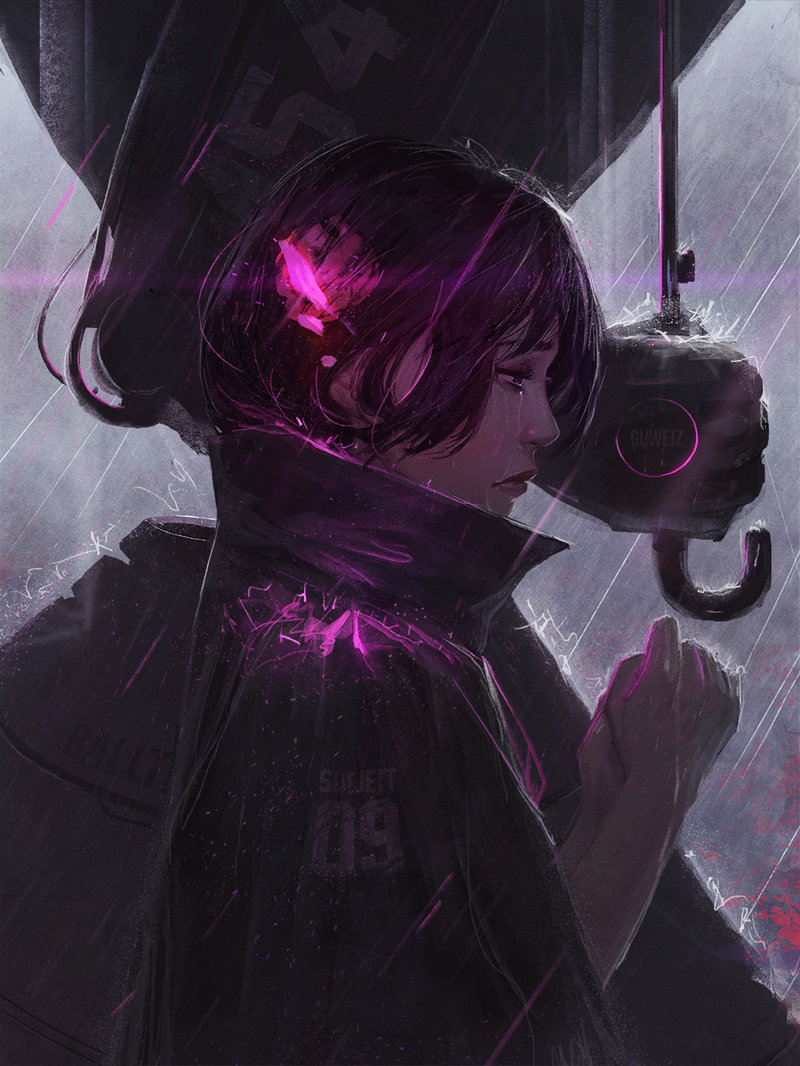
escape_by_guweiz-d9qh2m9

Begrudgingly, I have set aside “The Wisdom of Demons” for the foreseeable future.  It’s an idea story, and I’m afraid I began the narrative without enough preparation for where I wanted it to go or what I wanted to accomplish.  I do hope to return to it someday, once I’ve better netted the tone, didactic principle, and endgame of the story.

In the meantime, because I need something to occupy myself and experiment upon, I’ve been passing time with a fun, mildly satirical inside-joke sort of story called Creeksend, involving all of my personal friends.  While Creeksend is fun, it’s reminding me how much better I am at high fantasy than any other genre.  Wisdom of Demons was an urban fantasy geared towards adults, slated to be an independent work.  It made more sense to go that route than say, a multi-volume, high-fantasy series.  The market just doesn’t take those from new authors without a fight.

This is to say, I resurrected one of my old story ideas in this same vein of fantasy, an epic called “Heroica.”  I might start readjusting myself to working on that once I wrap up my shenanigans with Creeksend, as I am very fond of the magic system and characters I’ve created in the Heroica universe.

Writing aside, my media consumption has been cut of a different cloth, lately.  I’ve almost exclusively listened to podcasts, such as the Cracked Podcast, Criminal, and Welcome to Night Vale, which all have wildly different tones and agendas.  I’ve been trying to go through The Office, but I do not like it as much as I thought I would.  I’ve played no new video games and watched no new anime, but I did go through every single character bio for the League of Legends roster as research for lore building, character creation, and prose writing.  It was marvelous.

On a serious note, someone I care about deeply has been going through a rough time lately, so I’m considering fasting for her heart.  There are a lot of bad influences around her, changing her, and it’s painful to watch, but there’s not much else I can do.  Fasting and prayer seem to be the most evident options.

(Art is credited to GUWEIZ on Deviantart (http://guweiz.deviantart.com/))
escape_by_guweiz-d9qh2m9


“Hymni’s Broken Gift” – An Exercise in Myth-Crafting

Not in the beginning, but very soon after, when the gods set to discover their place in our scheme of lights, one was burdened with shouldering the color black.  Hymni would have settled for nearly any color.  He would not have complained about blue, which Usiris had requested in a hurry.  Green was not his favorite, but he would have taken it if Qitom had not already.  Perhaps red was a little rough, but it was passionate.  He would have liked red.

But more than any of these, Hymni had hoped to be the god of white.  Instead, that privilege went to the gentle-hearted Ririka.  Hymni did not hate Ririka, but he hated that she was gifted white, and he was not.

Yet, the Greatest of Them saw fit for Hymni to be the herald of black.  What might he do with such a bitter color, he thought?  In time, he figured he could find his way around the dilemma.

Because of Hymni, we now have a color for infection.  We have something strong and evident for scripting.  We have any of several hard minerals, stones, and metals with which to build our societies.  Desperately, Hymni found more ways to use his color for beauty.  The core of our eyes, the endless adventures of the wandering night sky.  He tried, but did not meet satisfaction.

White shine filled the eyes of men, glowing with love and admiration. White stars burned through his blanket of night.  Ririka meant nothing cruel of it, she just knew the best ways to find beauty in her color.  Hymni’s black helped accentuate her wonders.

That was all well and good, but Hymni wanted more.

So for decades, we had the weeping ash fall of Hymni’s tears.  The whole world gone black in the depths of Hymni’s jealousy and sorrow.  Of course, we know that black can be just as beautiful as any other color, but Hymni did not think as such.  To him, it was a color for evil, a color meant to be overcome by its vibrant kindred of red, gold, blue, silver, white.  But if mankind had not detested the color before, it had begun to now.  Black killed our plants, coated the land in waves and mounts so thick we could hardly travel from one place to another.  It blotted out the sun, it drove away the light.  It made us hate Hymni, and so reflected the way he’d come to see himself.

Hymni had never felt a craving for violence before, but there it was, piece by piece, swelling inside of his heart.  A strange tumbling captured his gut, curled his fingers, clenched his chest.  He did not long to live the rest of his immortality as the dreadful spring from which all blackness sprang.  He did not wish to live in sorrow, a subject to the hatred of others.

Gods, it seemed, were not immune to the treacherous whims of anger.  In his hour of wrath, Hymni sought out Ririka and struck her down, thinking somehow he might be able steal her white.  Perhaps then he would be loved like Ririka was loved.  She was fragile and broke easily.  He learned there was red inside of her, which he found odd.  Was there red inside of him, too?

But Ririka, she died slowly.  What’s more, and Hymni found this hauntingly curious, she wore the greatest of tender smiles on her lips, even as red pooled at her side where he rent her open.

“I’m sorry,” she rasped.  “I am sorry, Hymni.”

Words scattered from Hymni’s tongue, leaving him dry and abandoned.  He watched the girl, observed her slipping away.

“I’m sorry you have not felt loved for so long.”  She coughed, and the red came out from there, too.

“I,” Hymni said, “I only wanted your color.  It’s beautiful.  It’s all I’ve ever wanted.”

Her nod was a whisper of the body, hardly existing, hardly perceived.  “You may have my color, Hymni.  I hope you find happiness with it.”

At this, the darling goddess passed into a realm unknown and uncertain even to their kind.  Only now, with the trace remaining light banished from her body, did Hymni realize what he had done, and with the understanding came a new sort of sorrow.

As he’d wished, the color we call white fell into his hands.  But somehow, it did not make him feel any more loved.  The joy he’d anticipated, the sense of peace, they did not come.  No, in their stead, he was met only with grief.  He had brought about the end of one of his own, and she had gone so far as to apologize for his actions?

Hymni could not hold himself upright.  He came crashing to his knees before Ririka’s soul-empty shape, smile still against her cheeks.  Taking her body into his arms, Hymni wailed every misery old and young.  He did not care for the red stains against his body.  He did not care for black, nor white, both now under his dominion.  He cared only for the girl, taken unjustly.  Taken by his selfishness.

Angry in a new way, Hymni expelled the undying ash-storms from the sky.  He pushed the ash into corners and pockets of the world where it belonged, places where fire churned in the air.  Then, the world began to fill with tears of white.  Hymni’s despair took on such great lengths that it superseded his world and made its way into our own.  First it started slowly, then it began to build.  One flake became two, which with time became thousands, and then millions and billions.

Infinite white came down all across the world, some sort of request of forgiveness or atonement to a girl who was no longer there.  Where black ash had brought difficulty and strife to men, this new ash, something we’d later come to understand was not ash at all, had brought comfort and beauty.  In time, we’d call it snow, and it would identify entire seasons of our world.

Now, it stands as the penance of a lonely god who continues to grieve for the foolishness of one mistake.  It is a promise, I think, that Hymni would try his best to care for us in Ririka’s place.  It is a statement of hope, that we all have an opportunity to forgive ourselves.

I do hope Hymni begins to love himself the way we love him for giving us this snow, this most perfect of gifts.  For it is the opinion of no man, that one who can create something so beautiful, could possess a heart worth hating.

I do hope Hymni finds the peace he so longed to find, as all of us do.

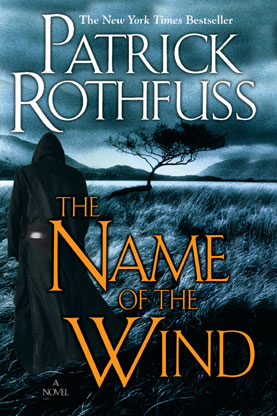
An Excerpt from “The Name of the Wind” by Patrick Rothfuss

I have no new material to share, so I decided it would be an appropriate time to whip out a passage from my favorite book, “The Name of the Wind” by Patrick Rothfuss.  NotW is the first of two in Rothfuss’s “Kingkiller Chronicle” series, and both are completely worth your time.  If you enjoy this passage, please consider buying the book and supporting ol’ Pat.


“Perhaps the greatest faculty our minds possess is the ability to cope with pain. Classic thinking teaches us of the four doors of the mind, which everyone moves through according to their need.

First is the door of sleep. Sleep offers us a retreat from the world and all its pain. Sleep marks passing time, giving us distance from the things that have hurt us. When a person is wounded they will often fall unconscious. Similarly, someone who hears traumatic news will often swoon or faint. This is the mind’s way of protecting itself from pain by stepping through the first door.

Second is the door of forgetting. Some wounds are too deep to heal, or too deep to heal quickly. In addition, many memories are simply painful, and there is no healing to be done. The saying ‘time heals all wounds’ is false. Time heals most wounds. The rest are hidden behind this door.

Third is the door of madness. There are times when the mind is dealt such a blow it hides itself in insanity. While this may not seem beneficial, it is. There are times when reality is nothing but pain, and to escape that pain the mind must leave reality behind.

Last is the door of death. The final resort. Nothing can hurt us after we are dead, or so we have been told.”

cover_277

An Exercise In Alliteration (Ben Vs. The Asteroid)

Hello all of you strange creatures,

If you are not familiar with alliteration, it’s the literary technique in which multiple successive words in a line begin with the same consonant sound.  A common example is the tongue-twister “She sells seashells by the seashore,” which utilizes alliteration on both the hard ‘S’ sound as found in ‘sells’ and the dragging ‘sh’ sound in ‘she.’

I am going to attempt to recreate this technique in a series of lines, each modeled after a letter of the alphabet.  What’s more, I’m going to try and make it at least sort of resemble a story (we’ll see how that goes).

Remember, the words don’t necessarily have to begin with that particular letter, just have a sound in common with it. Don’t be surprised if I skip Q or X, because I’m fond of my sanity.

Let’s begin.

All at once, an angry asteroid attacked
Before Ben could bounce back from his bereavement
Could a crisis more criminal have possibly come?
Doubting his usually deliberate disposition, Ben dared not die
Even eagles evacuated enormously evil events
Fly as Ben might, fleeing was fickle and for the faint-hearted
Good god the asteroid was great and gruesome, though
How could this humble human hope to do anything but hesitate?
If an incident of such insane implications were to initiate
Just what kind of jostling juxtaposition would we find ourselves?
Kings would cower before this catastrophe
Lest all lowborn men lose hope of life
Might Ben muster the mettle to master his misgivings?
Never give in and knock away his nightmares?
Only our own hearts offer opposition
Pounding, pumping pain through every pore
Quit calculating the complications, Ben. Get crackin’
Run red with haste, retreat with raw reliance
So you may see a sweeter sunset someday
Tomorrow won’t turn you tipsy, try to be tougher
Unless you understand your place in the universe
Victory will fill your veins like a voice of valor
Won’t it be wonderful to wish upon the stars without worry?
eXcept that won’t happen, for your exit has been extinguished
You are young and you are yelling because you have
Zero seconds to hope you become a zombie.

So I may have cheated a few times, but I did technically get every letter in there.  The coherency of that story leaves something to be desired, but I’m contented with what I’ve got.  Perhaps next month I shall try again and see if there’s any improvement.

God bless, make a friend, always remember to smile.

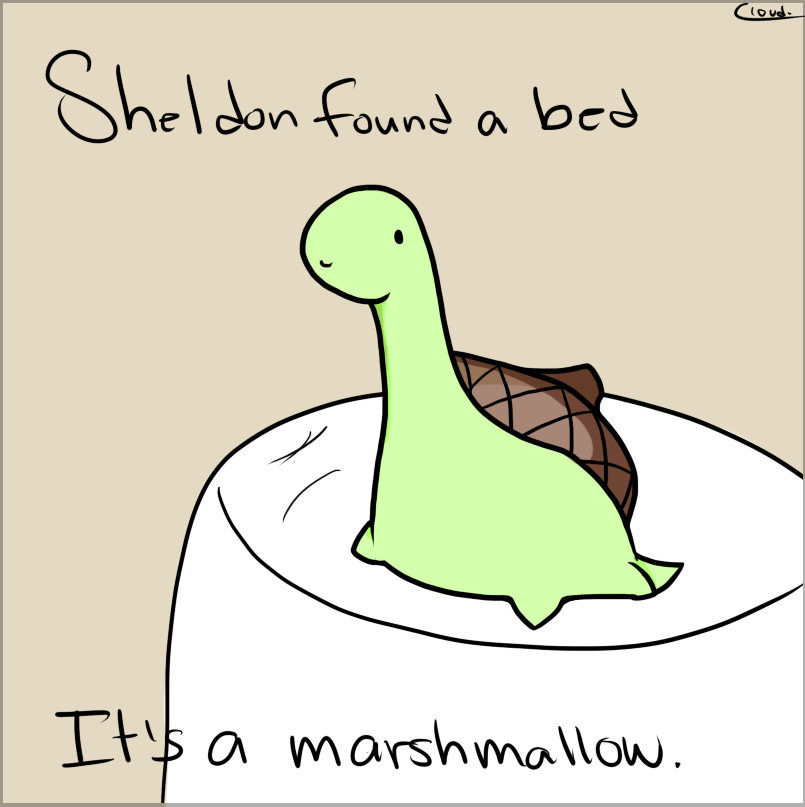
Here’s a picture of Sheldon the Turtle for your entertainment.  Compliments of DeviantArt

sheldon__3_by_minucco-d5pl1mk